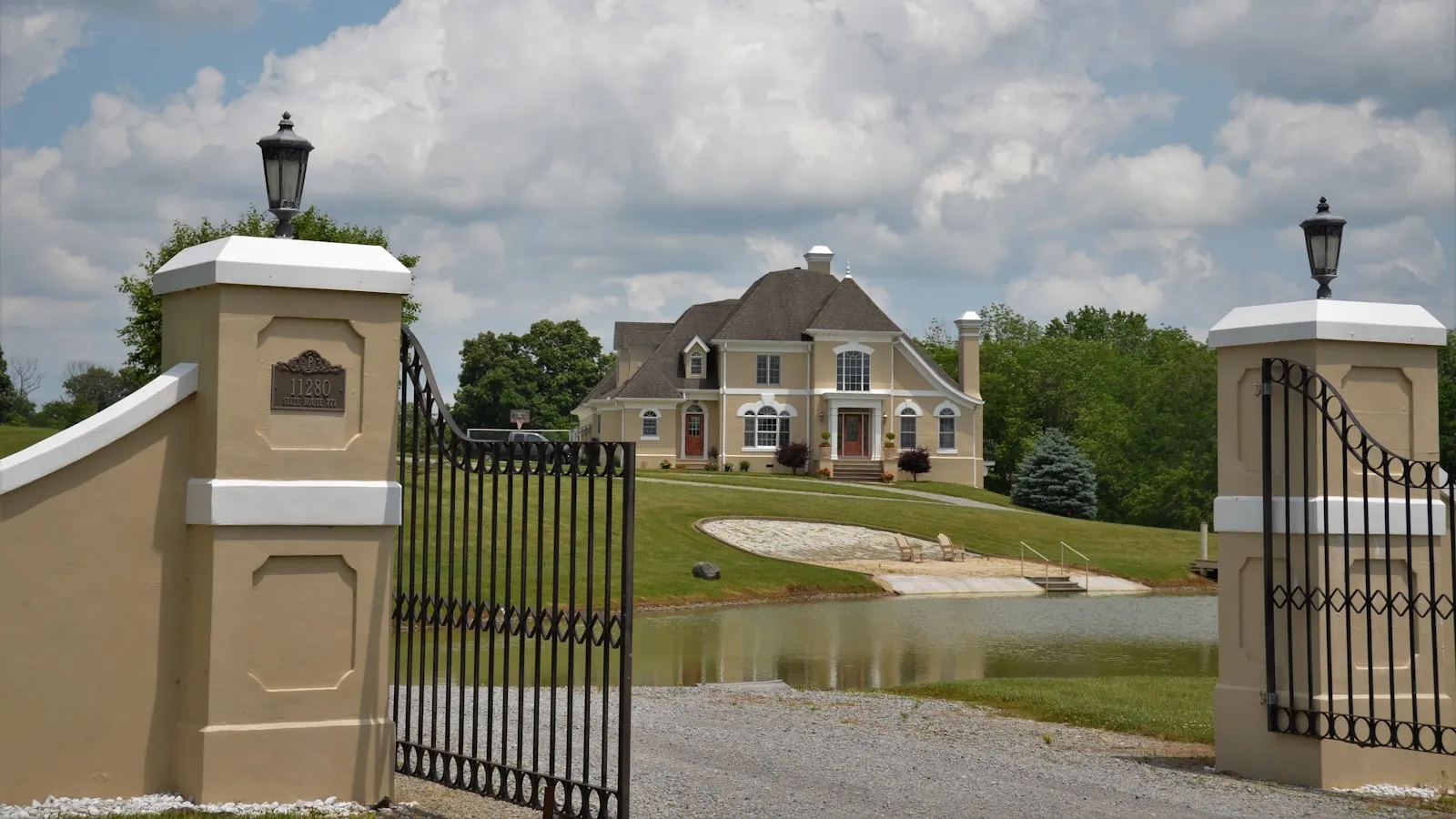
Both a long-range RFID reader and a car-GPS tag open a gate on arrival without a button, but they solve it from opposite ends: the reader sits at the gate and reads a tag on your car, while the GPS tag rides in the car and triggers the opener you already own. For an HOA or a busy entrance with many cars, the reader wins. For a single-family driveway, the car-GPS tag is less hardware for the same result. The deciding factors are trigger distance, install, cost, and security, and which one holds up depends on your gate.
The core difference: where the intelligence lives
A long-range RFID reader is fixed hardware mounted at the gate. It broadcasts a UHF field, and when a car carrying a windshield tag drives into range, the reader reads the tag’s number and tells the operator to open. The car is passive; the gate is smart. This is how most gated communities do hands-free entry. (For the full breakdown, see the long-range RFID reader guide.)
A car-GPS tag flips that. The intelligence rides in the car: a device with its own GPS knows the car’s distance to home and triggers the opener as you approach. The gate stays a normal gate; the car is smart. This is the GPS gate opener category.
That one difference drives everything else.
The axes that decide it
Trigger distance. A passive reader reads the tag at roughly 8 to 50 feet, so the gate opens as the car reaches it. A car-GPS tag triggers on distance to home, so it can start the gate further out. On a long driveway, that’s the difference between a gate that’s already moving and one you wait for.
Install. The reader is a gate-mounted project: mount the reader, run power to the gate, wire it to the operator, and enroll a tag per car. A car-GPS tag is a two-wire retrofit at the opener’s control board, with the trigger riding in the car.
Cost. A UHF reader is commercial-grade, usually $1,500 to $3,000, plus wiring, install, and tags. A residential GPS tag system is one-time hardware in the low hundreds. For a single home, the reader alone often costs more than the gate operator.
Scale. The reader is built for volume: dozens or hundreds of cars flowing through one entrance, managed from a central credential database. A GPS tag is built for one household’s cars.
Security. A passive windshield tag responds to any compatible reader, and skimming or cloning is a documented access-control concern. A car-GPS Tag is tied to the car and anti-theft, so a removed Tag does nothing.
Side by side
| Long-range RFID reader | Car-GPS tag (Proxly) | |
|---|---|---|
| Where the hardware lives | Fixed reader at the gate | A Tag in the car |
| Trigger distance | ~8–50 ft (at the gate) | The car’s distance to home |
| Install | Reader + power + wiring, professional | Two wires at the opener |
| Cost | $1,500–$3,000 + tags + install | $199 early bird ($499 retail) |
| Best fit | Communities, apartments, high throughput | A single-family driveway |
| Credential skimmable off the glass | Passive tag concern | Anti-theft Tag |
| Works across opener brands | Yes | Yes |
Choose the reader if…
- You manage an HOA, apartment complex, or business park.
- Many cars need to flow through one entrance without stopping.
- You want a central database to grant, revoke, and audit access.
Choose the car-GPS tag if…
- It’s your own single-family driveway.
- You don’t want to mount a reader and run power to the gate.
- Your gate sits well back from the house and you want it opening on approach.
- You want to keep the opener you already own.
Why drivers pick Proxly for a home gate
For your own driveway, a reader is a lot of hardware to reach “the gate opens as I pull up.” Proxly is the car-GPS side of this comparison, built for the home case. A small Tag rides in the car with its own dedicated GPS, knows the car’s distance to home, and triggers a Hub wired to your gate opener’s control board. No reader to mount, no power to run to the gate, no subscription, and it works across opener brands.
Two things separate it from a reader. It triggers on your approach distance rather than in the last few feet. And the credential can’t be skimmed off your windshield, because the Tag is anti-theft. Proxly is pre-launch — reserve a spot for a refundable $20, which locks the $199 early-bird price (first 100; $499 retail after). If yours is a busy community gate, the reader is still the right tool.
Last updated: 2026-08-03. Reader and tag specifications and prices are drawn from manufacturer and distributor sources at the time of writing and vary by model and installer; confirm current details before purchasing. Proxly is an independent product and is not affiliated with, sponsored by, or endorsed by any company mentioned. All product names and trademarks are the property of their respective owners. Spotted an inaccuracy? Email getproxly@gmail.com.
Frequently asked questions
- Where the intelligence lives. A long-range RFID reader is fixed hardware at the gate that reads a tag on the car as it arrives, so the trigger point is the reader's read range (roughly 8 to 50 feet). A car-GPS tag puts the intelligence in the car: it knows the car's distance to home and triggers the opener you already own, so it can start the gate at your actual approach distance. The reader suits multi-vehicle sites; the GPS tag suits a single home.
- For most single-family driveways, a car-GPS tag. A long-range reader is community-scale hardware: a $1,500-$3,000 reader plus power, wiring to the operator, professional install, and a tag per car. That's a lot of system for one or two vehicles. A GPS tag wires into the opener you already own with two wires and triggers on your approach. The reader wins when hundreds of cars need to flow through one gate.
- Both connect to the gate operator's control input, so both work across opener brands in principle. The reader connects through the gate controller's Wiegand or serial input; a GPS tag system wires to the opener's low-voltage trigger (single-button-control) input. Confirm your operator exposes an accessible trigger input before either install.
- They trade off differently. A passive RFID windshield tag is convenient but responds to any compatible reader, and tag cloning and skimming are documented access-control concerns; communities manage this with an enrollment database and by disabling lost tags. A car-GPS Tag like Proxly is tied to the car and anti-theft, so it does nothing if it's pulled from the vehicle. Neither is a full security system on its own.
- A passive RFID reader opens the gate as the car reaches it, typically within 8 to 50 feet depending on the reader. A car-GPS tag triggers on the car's distance to home, so it can start the gate further down a long driveway rather than only at the gate. If your gate sits well back from the house, the trigger distance is the deciding factor.
What's the main difference between an RFID gate reader and a GPS gate tag?
Which is better for a home driveway, an RFID reader or a GPS tag?
Does either one work with any gate opener?
Which is more secure?
How far away does each one open the gate?
Keep reading
What Is a Gate Opener's Duty Cycle and Why It Matters
Duty cycle tells you how hard a gate opener motor can work before it needs to cool down. Here's what the spec means, how to calculate your requirements, and what happens when you ignore it.

FAAC SimplyConnect Review: Setup, App Experience, and the Cloud Question
FAAC SimplyConnect adds WiFi app control to FAAC gate openers through a dealer-installed module. Here's what it does well, where it falls short, and what to know before adding it.
Mighty Mule Alternatives for Driveway Gates: What to Buy Instead in 2026
Mighty Mule works for light-duty gates. When you need better reliability or hands-free access, these are the alternatives worth considering for your driveway.