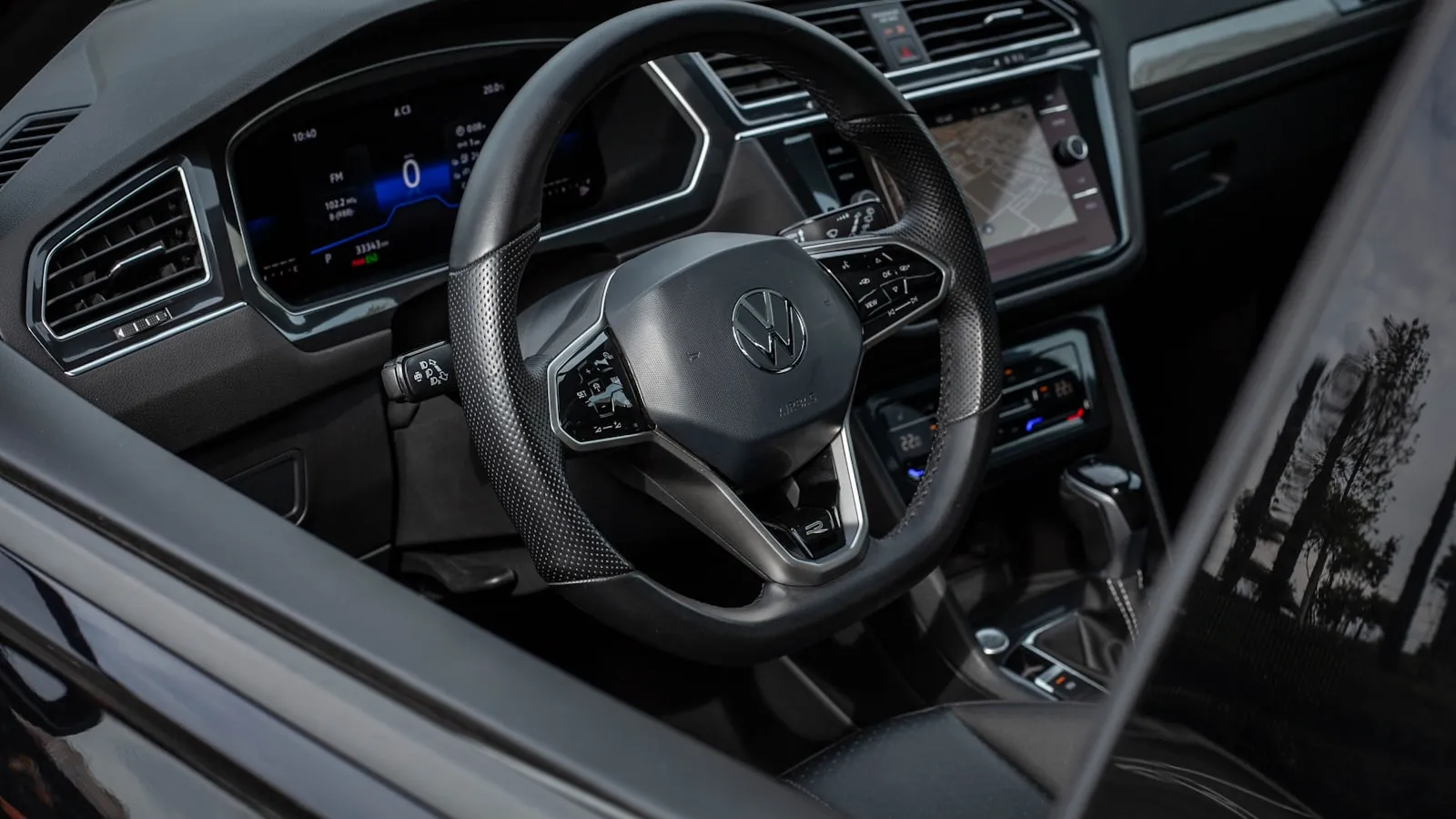
Pairing HomeLink to a LiftMaster CSW24UL takes two steps: train HomeLink from a working CSW24UL remote, then press the yellow LEARN button on the control board and press the HomeLink button again to sync the rolling code. The CSW24UL runs Security+ 2.0, so the signal copy that finishes the job on older fixed-code openers is only half of it here. Skip the second step and the button pairs to nothing, which is where most owners lose an unplanned forty minutes.
This guide covers the complete procedure and the specific points where it fails.
What You Need Before Starting
Physical access to the CSW24UL control board is required. The board lives inside the operator housing, typically mounted on the gate post. Look for a yellow button — that is the Security+ 2.0 LEARN button. A purple button means an older Security+ board (same general method, different LED behavior). An orange button means fixed-code, which uses a different pairing method entirely and is outside the scope of this guide.
Beyond access, you need:
- A working CSW24UL remote. HomeLink has to capture its signal, so this step cannot be skipped
- The specific HomeLink button you want to assign (vehicles have two or three)
- The vehicle positioned within 50 feet of the operator, with a clear line between the car and the housing
- A few minutes without other RF remotes nearby — a handheld clicker actively transmitting can interfere with the LEARN handshake
It helps to understand why the procedure has two steps before running it. How HomeLink Actually Works explains the signal copy that both fixed-code and rolling-code openers need, and the extra LEARN exchange that Security+ 2.0 adds on top. The CSW24UL needs both, and there is no shortcut around either.
The Pairing Procedure
Step 1 — Clear the HomeLink button
If the button was previously paired to another device, clear it first. Hold the two outer HomeLink buttons simultaneously for about 20 seconds until the indicator LED shifts from a slow blink to a rapid blink. This erases all three channels. If your vehicle supports single-channel erase, check the owner’s manual — most vehicles clear all channels together.
On a new vehicle or a fresh install, skip this step.
Step 2 — Train HomeLink from the remote
Hold the CSW24UL remote 1 to 3 inches from the HomeLink button you want to assign. Press and hold both at the same time. Keep holding until the HomeLink indicator changes from a slow blink to a rapid blink, which confirms HomeLink has captured the signal. This step is what gives HomeLink something to transmit, and no LEARN-button sequence replaces it.
Step 3 — Press the LEARN button on the CSW24UL
Go to the operator and press the yellow LEARN button once. Hold it for one second, then release. You have about 30 seconds. Return to the vehicle and press the trained HomeLink button, up to three times if needed, to close the rolling-code handshake.
The control board will flash its indicator LED to acknowledge. Some vehicles complete the pairing at this point — the HomeLink LED changes to a rapid blink or a solid light. Others require a second press of the HomeLink button after the LEARN press to close the handshake. If the first attempt produces no change, press the HomeLink button once more from the vehicle.
Step 4 — Test from distance
Press the HomeLink button from the driver’s seat. The gate should begin its open cycle.
If nothing happens, test from 10 feet first. If the gate opens at 10 feet but not from 40 or 60, the antenna is the issue — not the pairing itself. See the troubleshooting section below.
Common Failure Points
The LEARN button was held too long. A brief one-second press stores the incoming rolling code. Holding the LEARN button for five seconds or more clears the board’s remote memory instead of writing to it. If the gate stops responding to existing remotes after a pairing attempt, that is what happened — re-pair all remotes from scratch.
Rapid blink during the LEARN press. A rapid HomeLink blink while pressing the LEARN button usually means HomeLink received interference — a nearby remote, another RF device, or a retransmit — rather than the CSW24UL’s handshake. Clear the HomeLink button, move any other remotes out of the vehicle, and repeat.
Antenna orientation. The antenna wire exits the control board and must hang vertically, free of the housing walls. A wire coiled inside the housing or pinched by the cover reduces effective range from the rated distance to under 20 feet. Uncoil it and let it hang.
Older HomeLink hardware. Vehicles produced before roughly 2012 shipped with HomeLink generations that handle Security+ 2.0 inconsistently. If the LEARN handshake repeatedly fails on an older vehicle, check your car’s HomeLink compatibility documentation. Some older systems require a separate HomeLink compatibility bridge module sold by LiftMaster.
For a broader look at how rolling-code pairing differs by opener brand, HomeLink Rolling-Code Programming covers the pattern across LiftMaster, Chamberlain, and their Security+ family. And if the CSW24UL pairing works initially but stops after a battery swap in the car, Why HomeLink Stops Working After a Battery Replacement explains what actually happened and how to re-establish it.
What This Doesn’t Solve
HomeLink on the CSW24UL works reliably once paired. The limitation is structural: it activates when you press the visor button, not when your car arrives. At a slide gate — which takes 10 to 20 seconds to complete a full open cycle — you are typically stopped at the gate, pressing the button, and waiting.
For owners who find the manual trigger is still the daily friction point, there is a different approach to gate access: one where the gate begins opening while the vehicle is on approach, triggered by position rather than a button press. The Premium EV Arrival Stack covers how that sequence works for EV owners, and the same category applies to non-EV driveways. Proxly is one product in this space — it is pre-launch, but the early access list is open if you want to see whether the hardware fits your gate and opener.
The HomeLink pairing to your CSW24UL is worth completing regardless — it gives you a reliable fallback access method without depending on a phone or a subscription.
Frequently asked questions
- The CSW24UL ships with a Security+ 2.0 rolling-code receiver. The LEARN button on the control board is yellow — that color is the Security+ 2.0 identifier across the LiftMaster line. If your unit has a purple LEARN button, it uses the older Security+ protocol, which pairs via the same general procedure but with a different LED sequence.
- The CSW24UL control board stores multiple rolling-code remotes in memory. Each HomeLink button registers as one remote entry. If two cars use the same gate, pair each car's HomeLink button separately via the LEARN sequence — you don't need to clear the board between pairings.
- Check the antenna wire first. The CSW24UL antenna must hang vertically from the control board, not coiled inside the housing. A coiled or tucked antenna can reduce effective range enough that the LEARN handshake completes — the two-way exchange has shorter range than normal operation — but daily drive-up triggering fails.
- No. HomeLink learns by capturing the radio signal from a working CSW24UL remote and reproducing it, so a remote is needed for the first step. The LEARN button on the control board completes the rolling-code sync afterward. It cannot supply the signal HomeLink has to copy. If the remote is lost, follow LiftMaster guidance for obtaining a replacement.
- No. The control board retains rolling-code memory through power interruptions. Only a deliberate memory clear — holding the LEARN button until the board's indicator LEDs flash in the erase pattern — removes paired remotes. A power outage, regardless of duration, does not wipe HomeLink from the board.
Does the LiftMaster CSW24UL use Security+ 2.0?
How many HomeLink buttons can pair to one CSW24UL?
HomeLink blinks during pairing but the gate won't open — what's wrong?
Can I pair HomeLink to the CSW24UL without an existing remote?
Will a power outage erase my HomeLink pairing on the CSW24UL?
Keep reading

Infiniti QX60 and QX80 HomeLink: Programming a Driveway Gate
Infiniti QX60 and QX80 have three HomeLink buttons in the overhead console. For a driveway gate, you need a two-step process: train from the remote, then sync rolling code at the LEARN button.
How to Pair HomeLink to a CAME Gate Opener
CAME gate openers use 433.92 MHz and their own rolling code. Here is how to pair HomeLink — and why the receiver's LEARN button is the step most guides skip.
Which Cars Have HomeLink? A Make-by-Make Reference for 2026
HomeLink availability depends more on trim than model. This reference lists which cars include it factory-fitted in 2026, and what to do if yours doesn't.