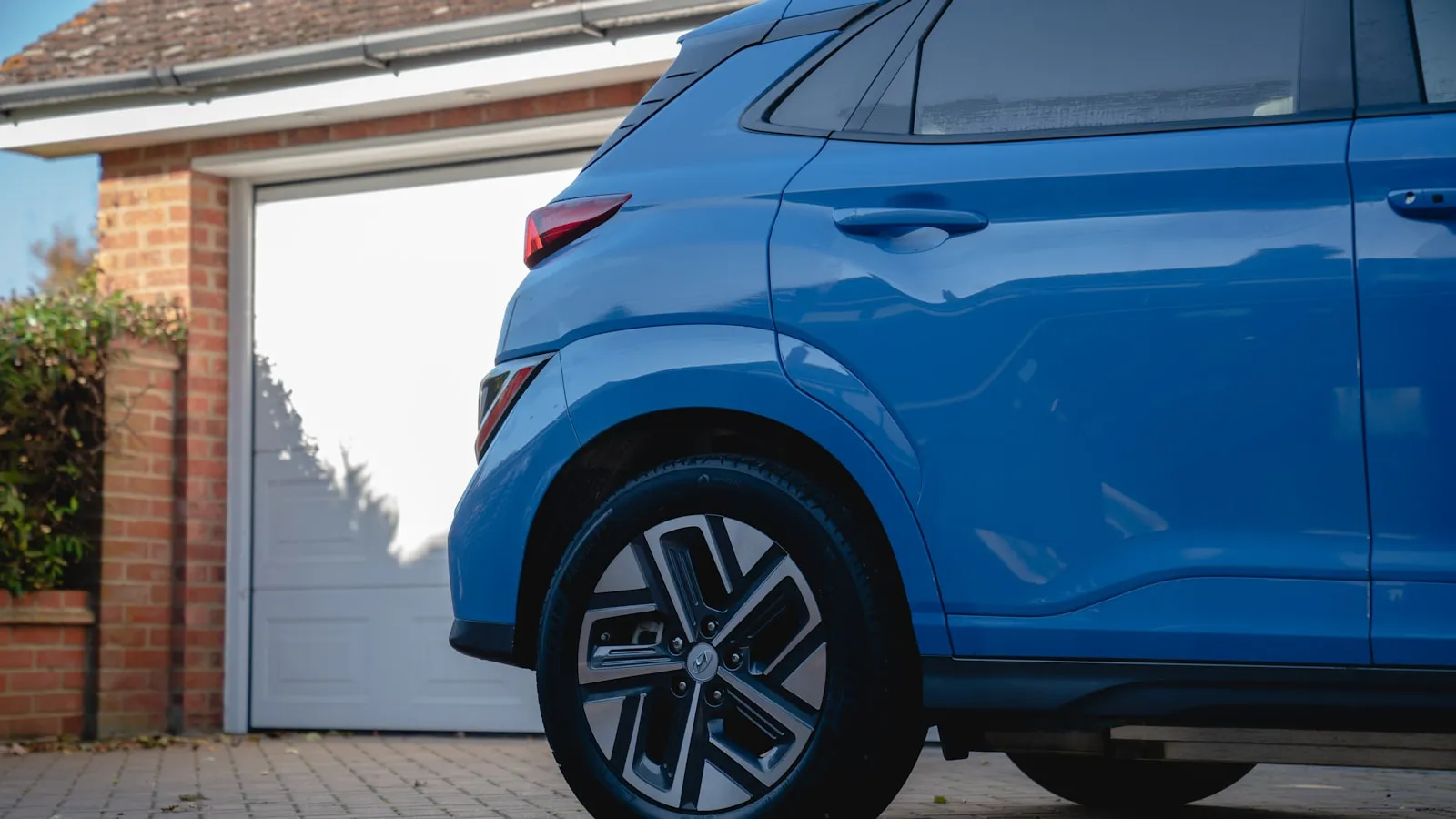
Smart garage apps like myQ, Remootio, and iSmartGate can run a driveway gate — wire one to the opener’s dry-contact input and the app triggers it the same way it does a garage door. The catch is that these apps were built for a garage 30 feet from the router, not a gate mounted 100 to 200 feet out on a post. Two things follow from that: getting WiFi to reach the gate motor, and a manual phone tap at the gate instead of a hands-free open on approach.
The name, as it turns out, is accurate in ways that go beyond marketing. These are garage apps. “Smart” is a marketing adjective that tells you little. “Garage” is a technical statement about where the system was designed to operate.
Driveway gate owners discovering this difference after a $200 hardware purchase is a repeating pattern. The apps work, technically. The question is what they were designed to do — and whether a residential driveway gate counts as that.
What Makes a Garage Different From a Gate
A garage door opener installation assumes a few conditions so common they go unstated in most user guides:
- The opener motor is housed indoors, in a sheltered space attached to or within 30–40 feet of the house
- The home WiFi router’s 2.4 GHz signal reaches the garage without a repeater
- The door cycles a handful of times per day
A residential driveway gate installation shares none of these defaults:
- The gate motor is mounted outdoors on a post, fully exposed to weather, UV, and temperature swings throughout the year
- The property line may be 50, 100, or 200 feet from the main house — sometimes more on rural or semi-rural properties
- The home WiFi signal weakens steadily across open yard and then meets a stone or brick pillar at the gate motor mounting point
- Gates in active households cycle 10–20 times per day across two vehicles, deliveries, and visitors
Every “smart garage” app is built around the first set of conditions. When the installation looks like the second set, the app is operating outside the environment it was designed for.
The WiFi Problem
The myQ gateway (Chamberlain Group), Remootio Gen 3, and iSmartGate Pro all operate as WiFi bridge devices. They connect to the home network over 2.4 GHz WiFi, receive commands through a cloud service, and trigger the opener via a wired relay — typically connected to the dry-contact input that simulates a button press. The app reports status, allows remote open and close, and enables household sharing.
This model works cleanly when the opener is in a connected garage. At a gate motor 100 feet from the house, the device needs a stable WiFi signal in a location that often has none. Closing the gap typically means running a cable to an outdoor mesh node, extending a powerline adapter to a weatherproof enclosure, or pulling a separate network drop from the house. Each of these adds setup complexity beyond what the box describes as “connect to your network and pair with the app.”
The reliability dimension matters separately. A cloud-connected relay adds the home network, the cloud server, and the app as sequential dependencies. If any of these has an outage when you’re waiting at the gate, the app can’t help. A standard radio remote has no such chain — the signal travels directly from the transmitter in your hand to the receiver on the motor.
For a driveway gate at the edge of a property, that dependency chain is longer and more likely to be interrupted than it is for a garage 30 feet from the router.
The Manual Trigger Problem
After connectivity, the second structural issue is how the command is initiated.
Every WiFi-bridge app operates on the same sequence: unlock phone, open app, tap button. On a typical phone without obstructions, that takes 8–10 seconds from pocket to result. This happens after you’ve already arrived at the gate.
For a garage door, this timing creates no real friction. You stop the car in the driveway, tap the app, pull into the garage, and let the door close behind you. The sequence has slack built into it because a garage approach doesn’t require precision timing or traffic awareness.
A driveway gate approach is different. Stopping in the street with traffic behind, extracting the phone, and waiting for the gate to complete a full swing or slide cycle — 12–20 seconds on most residential actuators — concentrates the friction at the worst possible moment. The in-vehicle myQ integration available on some GM, Ford, and Hyundai models moves the trigger to the dashboard rather than the phone. It helps, but it remains a deliberate tap at the gate rather than an automatic response to the vehicle’s approach.
EV owners notice this gap in particular. A vehicle designed to handle much of the “I’m home” sequence — adjusting climate, unlocking the charge port, sometimes navigating itself into the garage — still leaves the driver to manually trigger the driveway gate. The premium EV arrival stack covers where current EV home-arrival automation actually starts and stops across the major brands.
Where These Apps Work Fine for Gates
The preceding analysis doesn’t make WiFi-bridge devices useless for gate applications. They solve one specific thing well: remote manual control.
If the problem is “I want to open the gate for a delivery driver from my office,” or “I want to confirm the gate closed after my teenager left this morning,” a Remootio or iSmartGate unit wired to the gate motor and connected via a WiFi access point at the gate location handles that reliably. Both products have gate-specific modes that account for the longer travel time of swing or slide actuators compared to a garage door spring, which matters for the status feedback the app shows.
The Remootio Gen 3 review covers the gate-specific relay wiring and latency characteristics in more detail. For anyone weighing the hardware options, that review includes the installation steps for typical residential gate control boards.
The Subscription Layer
Most WiFi-bridge apps carry a monthly fee for the features gate owners actually want — smart home integrations with Alexa, Google Home, and HomeKit, along with shared access for household members beyond the primary user. myQ charges for its integration tier. Remootio’s cloud sharing and history features have a subscription layer. The upfront hardware cost is the visible number; the total cost of ownership over three to five years is a different number.
A full breakdown of which apps charge what for which features is in the subscription trap guide. For gate owners evaluating these products specifically, the subscription structure is worth knowing before committing to hardware.
The Structural Gap
WiFi-bridge apps deliver remote manual control. The opener responds when told to, from wherever you are. That is their design contract, and they fulfill it.
Automatic gate access — where the gate opens in response to the vehicle’s approach rather than a trigger from the driver — is a different design problem. It requires detecting the vehicle at distance, not waiting for a command from a phone. The system needs to distinguish a vehicle turning into the driveway from one parked nearby, work without a cellular or cloud dependency at the moment of approach, and handle the timing of a gate cycle that completes before the vehicle reaches it.
That is the category Proxly is building. If that specific problem — the gate open before you reach it, closed behind you after — is the one you’re trying to solve, getproxly.com/beta has the current overview of how the system works.
If the problem is remote manual control of an existing gate, the WiFi-bridge apps above handle it. The two problems are structurally distinct, and so are the products that solve them.
Frequently asked questions
- Yes, if your gate opener has a dry-contact relay input. The myQ gateway triggers the opener the same way it does a garage door. The constraints are connectivity — you need WiFi at the gate motor location — and the app still requires a manual phone tap rather than a hands-free vehicle-proximity trigger.
- Remootio Gen 3 can trigger any opener with dry-contact inputs, including most residential gate operators. The hardware works. The practical constraint is connectivity: the Remootio hub needs WiFi or Bluetooth range from where it mounts at the gate motor, which is often 50–150 feet from the nearest router.
- Three structural reasons: gate motors sit outdoors and far from home WiFi routers, the apps require active phone interaction rather than vehicle-proximity triggers, and monthly cloud subscriptions add recurring cost on top of hardware designed for an indoor, close-proximity garage environment.
- The category of access that opens on vehicle proximity — not a button press, not an app tap — uses the vehicle as the credential. It is a different hardware approach from WiFi-bridge apps. That category is distinct from the remote-control use case that myQ, Remootio, and iSmartGate serve.
Can I use the myQ app to open my driveway gate?
Does Remootio work on driveway gates?
Why do 'smart garage' apps not translate well to gate setups?
Is there a way to open a driveway gate without touching a phone or a clicker?
Keep reading

GMC Hummer EV HomeLink: Driveway Gate Setup and Timing
The Hummer EV weighs 9,063 lbs. Most driveway gates take 15-20 seconds to open. Here's how to program HomeLink and get the approach timing right.
Why Tesla HomeLink Fails on Driveway Gates (And the Fix That Isn't a Better Button)
Tesla HomeLink works reliably on garage doors. Driveway gates are a different problem. Here is what goes wrong and what fixes it.
Cybertruck Driveway Gate: Three Ways In, One Hands-Free
Cybertruck owners have three options for a driveway gate: built-in HomeLink, Tesla's geofence, or a GPS tag that opens at 300 feet with no button press.