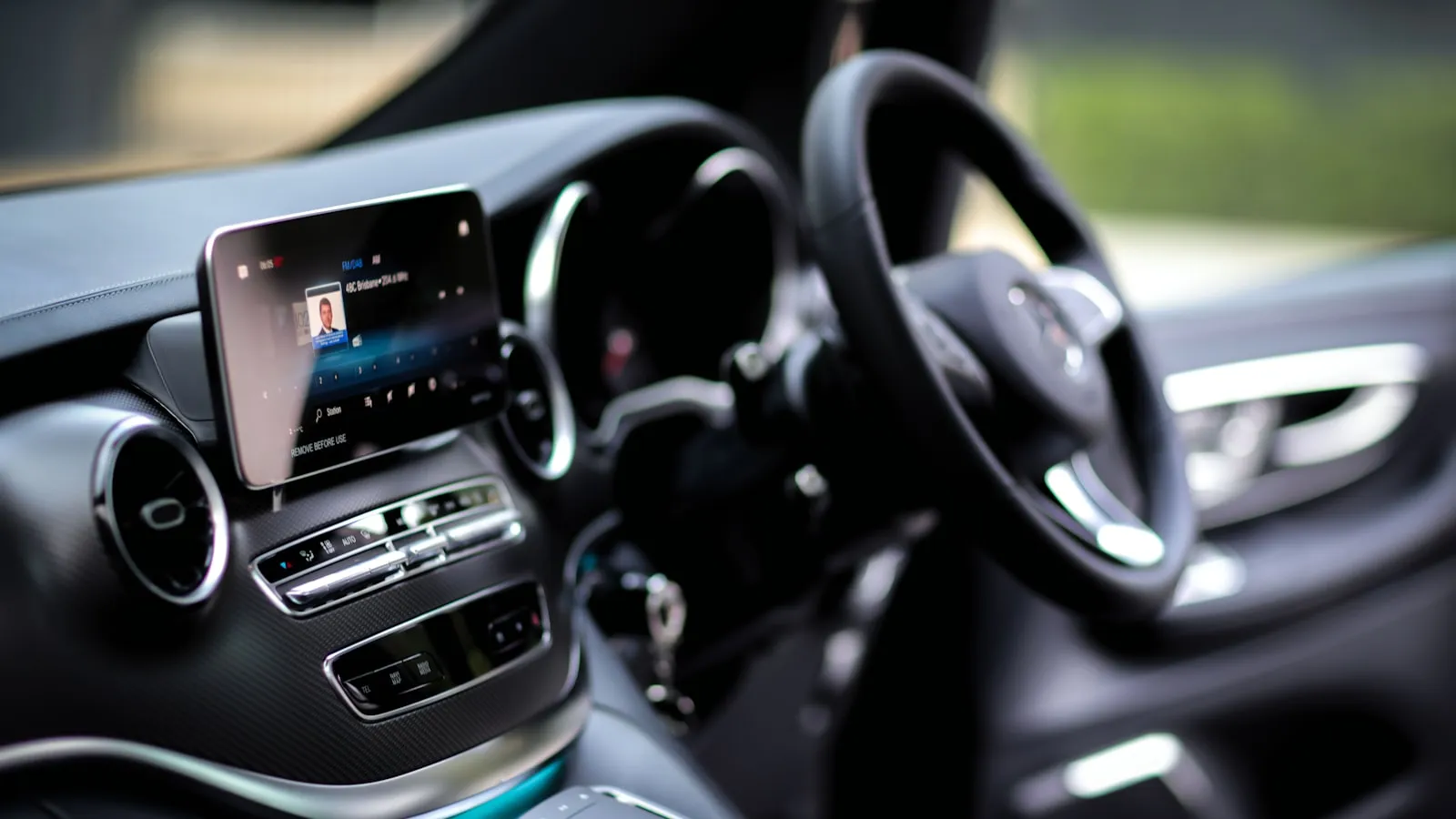
CAME gate openers use 433.92 MHz and their own rolling code system. HomeLink can pair to them — but the process requires a step at the gate operator’s control board that most guides leave out, and that omission is responsible for the majority of failed attempts.
What CAME Is
CAME is an Italian gate automation manufacturer that has been producing operators since the early 1970s. In the US, their hardware is common in mid-to-high-end residential installs, particularly in California, Florida, and Texas where properties with ornamental iron or aluminum swing gates are prevalent.
The main residential gate operator lines:
- Swing gates: ATI series (linear actuator arm), KRONO series (articulated arm), FROG series (underground rams for high-pillar installs)
- Slide gates: V6 series (rack-driven)
- Barrier arms: GARD series (shared driveways, parking areas)
If you have a swing gate with a CAME badge on the operator housing and a cylindrical or rectangular motor arm attached to the gate post, you are most likely looking at an ATI unit. The pairing procedure below applies across these product lines.
Frequency and Why It Matters
CAME’s residential operators in the US run at 433.92 MHz. That is one of the six radio frequencies HomeLink supports, so a pairing is possible. Before starting, confirm the frequency printed on the label inside your original CAME transmitter’s battery compartment. Most will say 433 MHz or 433.92 MHz. If the number is different, the process is identical — HomeLink scans multiple bands automatically during the training sequence.
For a full explanation of how HomeLink maps to the six RF bands, why some pairings work perfectly and others fail intermittently, and what the LED blink patterns mean during programming, see how HomeLink works and where it quietly breaks.
Fixed Code vs. Rolling Code: Which CAME Do You Have?
Most CAME operators sold after roughly 2010 use rolling code. The practical check: press your original CAME remote twice in quick succession while standing at the gate. If both presses open the gate without a delay or miss, rolling code is working. If the gate opens on the first press but not the second, that is rolling code drift — the remote counter and receiver counter have diverged.
When uncertain, use the rolling-code procedure described below. It works on fixed-code CAME hardware as well, so there is no downside to defaulting to it.
Pairing Steps: Fixed-Code CAME
If your CAME installation uses fixed code, the pairing is a one-step process.
- Sit inside the car with the key turned to the accessory position or the engine running — the HomeLink module needs power.
- Select a HomeLink channel. Hold the button (typically one of three on the visor or overhead console) until the indicator LED begins slow blinking, usually about 20 seconds.
- Without releasing the HomeLink button, hold your original CAME transmitter 1–3 inches from the HomeLink module.
- Keep both held until the HomeLink LED shifts from slow blinking to rapid blinking. Release both.
Drive to the gate and press the HomeLink button to test.
Pairing Steps: Rolling-Code CAME
Rolling code requires the standard training above, followed immediately by a step at the gate operator board to synchronize the code counter.
Part 1 — In the car:
- Hold the HomeLink button until the LED blinks slowly.
- Hold the original CAME transmitter 1–3 inches from the HomeLink module.
- Wait for the rapid-blink confirmation, then release both.
Part 2 — At the gate operator (complete within 2 minutes of Part 1):
- Open the operator housing cover to access the control board.
- Locate the programming button, labeled MEM or LEARN on most CAME boards. On ATI and V6 units, it is a small push-button on the main PCB. Check CAME’s installation documentation for your specific model — ATI, KRONO, FROG, and V6 boards each have slightly different layouts.
- Press and hold the button until the receiver LED blinks (the blink count and duration vary by model firmware; the manual specifies). This puts the receiver in learn mode.
- Return to the car promptly and press the HomeLink channel once.
- The receiver LED should acknowledge the transmission. Pairing is complete.
Test from the end of the driveway. If the gate opens, the rolling code is synchronized.
Range After Pairing
CAME’s standard receiver modules are rated for distances adequate to residential driveway use. After HomeLink pairing, most installations work reliably at 20–50 feet. If range is shorter than expected, check the CAME antenna. It should hang free from the operator housing — not coiled inside or pressed against the steel motor casing. An antenna touching metal loses most of its range.
For a full checklist when range has degraded after a previously working pairing, see the HomeLink range troubleshooting guide.
What Breaks the Pairing
If a service technician replaces your CAME control board — common after a board fault, lightning strike, or water intrusion — the receiver memory goes with it. The HomeLink button will press and nothing will happen. The gate operator cannot retrieve the old pairing from the car; the codes live only in the receiver. Re-pair from scratch using the procedure above. On a cleared board, it takes about five minutes.
For context on how control boards, receiver modules, and limit switches fit into the complete gate operator picture, see how a residential gate opener works.
Other Failure Modes
A few specific scenarios cause failures beyond a missed LEARN step:
Receiver memory full. Older CAME receivers hold fewer codes than current-generation boards. If the memory is full, new codes are rejected without visible indication. Clear unused codes and re-pair.
Firmware variation. CAME has produced several board generations for ATI, KRONO, and V6. The LEARN mode trigger — how many seconds to hold, how many LED blinks confirm entry — varies across firmware. If the LED behavior does not match what the manual describes, verify the board generation with CAME technical support before assuming a hardware fault.
433 MHz congestion. In dense neighborhoods, wireless door sensors, security remotes, and other 433 MHz devices occasionally interfere. Confirm by testing at close range (10 feet from the operator). If the gate responds reliably at 10 feet but not from the driveway, interference is more likely than a pairing problem.
The Button Still Requires a Button Press
Pairing HomeLink to a CAME gate solves the credential problem — your car’s visor button becomes the transmitter. It does not solve the timing problem: you still reach for the visor, press, and wait for the gate to finish its travel before pulling in.
For gate owners who want the gate already moving when they arrive, there is a category built around that problem — systems that trigger on the car’s approach rather than a button press. Proxly is building in that space and is currently pre-launch with early access open.
References
- CAME: https://www.came.com — official product documentation and installation manuals for the ATI, KRONO, FROG, V6, and GARD series.
Frequently asked questions
- Yes. CAME's US-market gate operators run at 433.92 MHz, one of the six bands HomeLink supports. The pairing requires two steps: first training HomeLink from your original CAME transmitter, then pressing the receiver's LEARN or MEM button at the gate operator to sync the rolling code counter.
- On most CAME gate operators, the programming button is labeled MEM or LEARN and sits on the main control board inside the operator housing. The exact location varies by model — ATI, KRONO, V6, and FROG boards each have different layouts. CAME's installation documentation for your specific model is the reliable reference.
- CAME's residential gate operators sold in the US operate at 433.92 MHz. Check the label inside your original CAME transmitter's battery compartment — the frequency is printed there. Older models occasionally used different frequencies, but 433 MHz is standard on hardware produced after the mid-2000s.
- The most common cause is a missed or timed-out LEARN step at the operator board. The initial training captures the signal format, but without the board-side sync, the receiver does not recognize the HomeLink channel. Delete the HomeLink channel and repeat the full two-step procedure.
- Yes. Repeat the pairing process from the second vehicle. Each HomeLink channel registers as a separate entry in the CAME receiver's memory. Most CAME receivers hold a large number of codes, so adding a second car will not overwrite the first.
Does HomeLink work with CAME gate openers?
Where is the LEARN button on a CAME gate opener?
What frequency does CAME use?
HomeLink paired but my CAME gate still does not respond. What is wrong?
Can I add a second car to the same CAME gate?
Keep reading

Infiniti QX60 and QX80 HomeLink: Programming a Driveway Gate
Infiniti QX60 and QX80 have three HomeLink buttons in the overhead console. For a driveway gate, you need a two-step process: train from the remote, then sync rolling code at the LEARN button.
Which Cars Have HomeLink? A Make-by-Make Reference for 2026
HomeLink availability depends more on trim than model. This reference lists which cars include it factory-fitted in 2026, and what to do if yours doesn't.
Chevrolet Tahoe and Suburban HomeLink: Programming a Driveway Gate
The Tahoe and Suburban share a 3-button HomeLink console. Here's how to pair it to a fixed-code or rolling-code driveway gate in under 15 minutes.