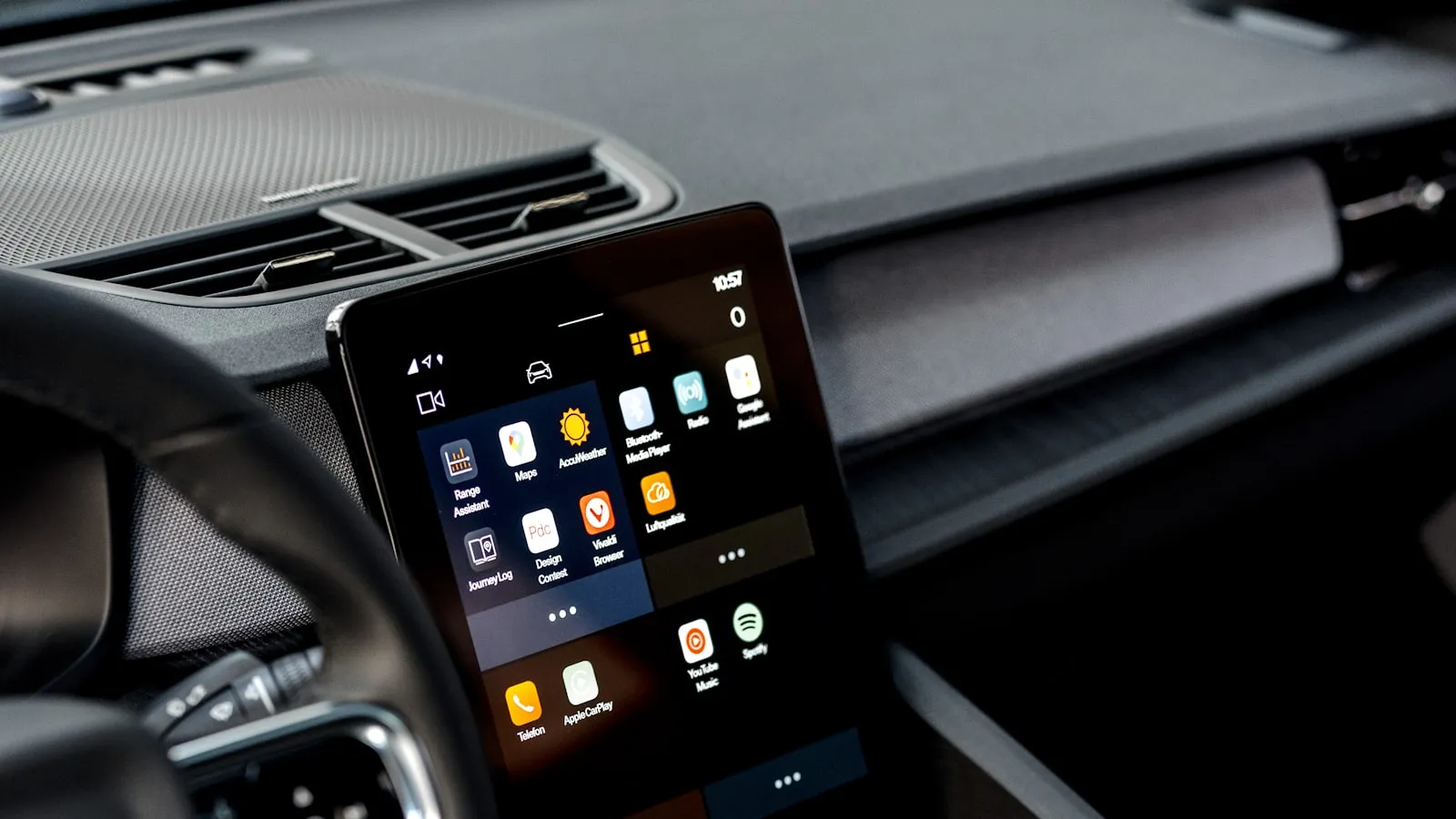
Honda has been quietly removing HomeLink as standard equipment from its 2023+ Civic, Accord, CR-V, Passport, and Gold Wing lineup. The buttons are usually still molded into the visor or mirror — but behind them, where the RF module used to live, there’s nothing.
The result: mid-trim Honda buyers expect HomeLink because it’s been standard for two decades, and discover after delivery that the buttons don’t actually do anything. Threads on r/Honda, r/Civic, r/Accord, r/CRV, and r/Goldwing have piled up. Owners call them “poverty buttons” or “phantom buttons” — same vocabulary across cars and motorcycles.
HomeLink removal is part of a broader cost-cutting pattern across Honda’s 2023+ lineup; multiple previously-standard features have been moved into dealer-accessory pricing or higher-trim tiers. We’re focused on HomeLink specifically here because it’s the most visible feature for garage-and-gate owners — and because the workarounds and trade-offs are worth understanding before you sign for the dealer accessory.
HomeLink: which Honda trims lost it, and when
Confirmed affected models as of 2026:
| Model | Affected trims | Status |
|---|---|---|
| Civic | Most non-Touring trims, 2023+ model years | RF module removed; buttons still molded into the part |
| Accord | Lower trims for 2026; even the 2026 Touring has a $280 dealer retrofit case (r/11thGenAccord) | Removed from standard, sold as dealer accessory |
| CR-V | Lower-to-mid trims, varies by model year and dealer bundling | Removed from standard; check trim-by-trim before signing |
| Passport | 2026 trims uniformly affected | Removed from standard |
| Pilot | Partial — higher trims still include it | Mixed; verify at delivery |
| Gold Wing | Bottom-left and bottom-right console positions, 2018+ | Optional accessory kit only (~$300) |
The viral moment came in mid-2026 when a 38,000-upvote thread on r/mildlyinfuriating called out Honda for gating the Civic’s garage opener feature behind a myQ subscription. The thread surfaced the broader pattern: most mid-trim Honda buyers expect HomeLink because it’s been standard for two decades, and discover it’s gone only after delivery — often when a dealer “forgets to mention it” during the walkthrough.
What ties the cars and the Gold Wing together is the same business logic: Honda buys the same visor/mirror or console part across trims (the buttons are essentially free once the plastic is molded), but the Gentex-licensed HomeLink module is sold separately. The buttons stay; the module doesn’t.
What it costs to add HomeLink back
Three real paths exist.
Option 1: Honda dealer accessory mirror swap — $250-$300
The official path. Schedule with a Honda dealership, they install a HomeLink-equipped mirror as an accessory. Warranty applies. Pricing varies $30-$50 by region and dealership; the Accord/CR-V mirrors run higher than the Civic mirrors due to part cost.
The catch: the dealer accessory route can cost more than just stepping up one trim level to a configuration where HomeLink is included standard. If you’re cross-shopping trims at purchase, do the math first.
Option 2: Aftermarket Gentex mirror with HomeLink — $150-$250
Same Gentex hardware as the dealer accessory, sold through Amazon, eBay, and Bob’s Mirrors. DIY install is 15-30 minutes — pop the existing mirror off (clip-on or screw-in depending on the year and trim), wire-tap to the existing mirror power harness, snap the new one on.
Trade-offs: no dealer warranty on the install, and you’ll want to confirm fitment for your specific model year before ordering. The Civic, Accord, CR-V, and Passport use different mirror mounts, so the part isn’t universal across the Honda lineup.
Option 3: Universal clicker workaround — $30-$50
Cheapest and most reliable: a $30-$50 universal clicker from Skylink, Genie GIT-1, or Multi-Code clipped or velcroed to the visor, center console, or under-dash area. No install, no warranty implications, no dealer trip.
Trade-offs: it’s visible, doesn’t look integrated, and you have to remember to grab it if you switch cars. For owners who prioritize cost over aesthetic, it’s the right answer.
Option 4 (motorcycle): Wingstuff or dealer Gold Wing HomeLink kit — ~$300
For Gold Wing owners, the dealer or Wingstuff HomeLink accessory kit runs roughly $300 and includes the module, harness, and bracket. Install is straightforward for a competent rider; many dealers will do it as part of routine service.
When the alternatives are worth it
You don’t have to add HomeLink back. Three categories of alternative cover the same use case.
Phone-app workflow
myQ ($45/year) works for Chamberlain and LiftMaster garage doors. Integrates with Apple CarPlay and Android Auto. Cloud-dependent — when Wi-Fi or Chamberlain’s servers stutter, the door does too.
Aladdin Connect, Tailwind, Genie Aladdin — similar phone-app workflows for non-Chamberlain openers. Each has its own quirks. Most don’t cover driveway gates.
Trade-off: every arrival is a phone-tap. You pull out the phone, unlock it, find the app, tap the button. For some owners, that’s fine. For others, it’s the exact friction HomeLink existed to eliminate.
Smart garage controllers
Meross, Tailwind, iSmartGate, Remootio ($30-$150) wire into the opener’s wall-button input and add Wi-Fi control. Most have no subscription. Apple HomeKit, Google Home, Alexa integration on most.
Same phone-tap-at-arrival trade-off as myQ. The advantage over myQ is no subscription and no Chamberlain lock-in.
DIY (RATGDO and friends)
$15-$60 of hardware plus Home Assistant. Maximum local control, no cloud unless you opt in, fully integrated into HA. Cheapest long-term path if you already run Home Assistant.
Trade-off: requires soldering or careful wiring plus enough HA comfort to make the automations sing. Not the right path if you’re not technical.
Hands-free arrival systems
This is the category that doesn’t require the phone tap or the visor button at all. Tesla Garage Auto-Open and Rivian’s arrival assist are factory examples, but both require HomeLink installed on the car (paid retrofit on Tesla M3/Y, included on Rivian) and the opener has to speak the HomeLink RF protocol.
For Honda owners, the factory hands-free option doesn’t exist. Pre-launch hardware like Proxly closes the gap for any car that doesn’t have HomeLink — including the 2023+ Honda lineup we’re talking about here.
Why Honda is doing this
The short version: margin pressure on mass-market trims, accessory upsell economics for dealerships, and per-feature subscription conversion data that gives Honda visibility into which features actually get used after purchase. HomeLink is one of the more extractable features in that calculus — the buttons are essentially free (already in the molded part), so removing the module is pure margin recapture.
What this means for buyers in 2026: don’t assume any feature is standard on a mid-trim Honda. Verify trim-by-trim. The “Touring” or top-tier trims usually include everything; the mid-trims are where the unbundling lives.
Where Proxly fits
We’re building Proxly because the HomeLink-as-margin-extraction pattern is becoming the industry default — not just at Honda, but across EVs (Tesla, Polestar, Hyundai/Kia) and ICE manufacturers alike. Our position is that the “open your garage from your car” experience shouldn’t require a $250+ retrofit, a $45/year cloud subscription, or a phone tap at every arrival.
Proxly is a small windshield Tag plus a Hub wired to your existing garage or driveway gate opener. The Tag detects when you’re arriving and talks locally to the Hub. Your gate or garage opens automatically. No HomeLink module required, no Chamberlain account, no phone app, no subscription. Works on any car (including the 2023+ Honda lineup without HomeLink) and any opener brand.
We’re pre-launch — Beta-20 runs through summer 2026, Kickstarter after. If you’re staring down the Honda dealer accessory upcharge for HomeLink and looking for a better path, getproxly.com is where to follow along.
Bottom line
HomeLink is gone from most mid-trim 2023+ Civics, Accords, CR-Vs, Passports, and from the Gold Wing motorcycle’s default configuration. The buttons are still there. The module isn’t.
Adding it back costs $250-$300 through the dealer, $150-$250 through an aftermarket Gentex mirror swap, or $30-$50 via universal clicker. The dealer route can cost more than stepping up one trim — worth checking before you sign.
Three habits navigate this cleanly: build the trim ladder math before buying, inspect features at delivery (test the buttons), and know which workaround fits your daily routine. The features Honda removed all have alternative paths — just don’t assume they’ll be included.
Frequently asked questions
- Honda began removing HomeLink as standard equipment on mid-trim Civics, Accords, CR-Vs, and Passports starting in the 2023 model year, with the unbundling expanding through 2024 and 2025. The visor or mirror buttons are often still molded into the part (because Honda buys the same part for all trims) but the actual RF module isn't installed. Owners on r/Honda, r/Civic, r/Accord, and r/CRV regularly call these the 'poverty buttons' or 'phantom buttons.'
- Confirmed affected models as of 2026: Civic (most non-Touring trims for 2023+ model years); Accord (lower trims for 2026, including the 2026 Accord Touring per a $280 retrofit case on r/11thGenAccord); CR-V (lower-to-mid trims, varies by model year and dealer-add bundling); Passport (2026 trims uniformly affected); Pilot (partial — higher trims still include it); and the Gold Wing motorcycle (bottom-left and bottom-right console positions, optional accessory only).
- Three paths. Honda dealer accessory mirror swap: $250-$300 installed (varies by dealership and region). Aftermarket Gentex mirror with HomeLink: $150-$250 for the mirror plus 15-30 minutes of DIY install — most Honda mirrors are clip-on or screw-in, doable with a flathead screwdriver. For the Gold Wing motorcycle, the dealer or Wingstuff kit runs ~$300 and includes the module and harness. If you're cross-shopping trims, the dealer accessory route can cost more than stepping up one trim level where HomeLink is included — worth the math.
- The Gold Wing tour bagger (2018+) has the HomeLink buttons molded into the center console layout (bottom-left and bottom-right positions) but Honda sells the actual HomeLink module as an optional accessory kit (~$300 through dealer or wingstuff.com). r/Goldwing owners use the same 'poverty buttons' vocabulary as the car side. The accessory kit is functionally identical to what's installed at the factory on other Honda models that include it standard.
- Three options. (1) Aftermarket Gentex HomeLink mirror via Amazon, eBay, or Bob's Mirrors: $150-$250. DIY install is 15-30 minutes — pop the existing mirror off (clip-on or screw-in depending on year), wire-tap to the existing mirror power harness, snap the new one on. (2) Universal clicker ($30-$50 from Skylink, Genie GIT-1, or Multi-Code) clipped or velcroed to the visor or center console area. Cheapest and most reliable, but visible. (3) Phone-app workflow with your opener's native app (myQ for Chamberlain/LiftMaster, Aladdin Connect for Genie) — free if your opener already supports it, but requires phone-tap at every arrival and depends on cloud reliability.
- No, but Honda is among the most consistent at it across the lineup. Tesla has removed HomeLink from Model 3 (since 2019) and Model Y (factory-omitted, retrofit module 1114984-00-B costs ~$230). Polestar 3 removed factory HomeLink (only the Orin chip software-side HomeLink remains). Hyundai/Kia EV6 was inconsistent on HomeLink across 2022-2024 model years (mostly absent). Audi A3 dropped the location-aware HomeLink popup from the MMI between 2019 e-tron and 2026 A3. Across the industry, HomeLink is being treated as a margin-extractable feature rather than standard equipment.
- Yes. myQ on the phone works for Chamberlain and LiftMaster garage doors ($45/year subscription). Smart garage controllers like Meross, Tailwind, iSmartGate, and Remootio ($30-$150 hardware) wire into the opener's wall-button input and give you phone-app control with no subscription. DIY hardware like RATGDO ($15-$60) integrates with Home Assistant if you already run that. Hands-free arrival systems (including pre-launch hardware like Proxly) skip the HomeLink path entirely — the car-side hardware sits on the windshield rather than in the visor or mirror.
Why doesn't my Honda have HomeLink?
Which 2023+ Honda models lost HomeLink as standard?
How much does it cost to add HomeLink back to a Honda?
Why doesn't the Honda Gold Wing have HomeLink standard?
What's the cheapest way to add HomeLink to a Honda without paying the dealer?
Is Honda the only car maker removing HomeLink?
Are there alternatives to HomeLink for a 2023+ Honda?
Keep reading
Two Cars, One Driveway Gate: Programming HomeLink Without Conflicts
Two vehicles sharing one gate can both use HomeLink without conflicts, if each completes its own rolling-code enrollment. This guide covers pairing steps, failure modes, and slot-budget math.
Premium Cars Are De-featuring HomeLink — Who, How, and Why
Tesla, Honda, Polestar, Ford and others have quietly removed, paywalled, or downgraded HomeLink across recent model years. Here's the pattern, the counter-examples, and what owners can do.
HomeLink in a Leased Vehicle: What Gets Reset When You Return It
When you return a leased car, the dealer checks mileage, paint, and tires — but not HomeLink. Your gate and garage codes stay in the car until someone clears them.