HomeLink has been the universal in-car gate and garage opener for 30+ years. Press one of three buttons in your visor or mirror, the gate opens. It has worked on virtually every residential opener brand made since the late 1990s, and it has been included as standard equipment in nearly every car sold in North America for two decades.
Across the last 3-5 model years, that has quietly changed.
Tesla led the retreat in 2019. Honda followed in 2023. Ford pulled it from most trims in 2024. Polestar replaced it with software in 2026. Lucid Gravity charges extra for it. Honda’s 2026 Passport went a step further — replacing the visor button entirely with a myQ subscription that costs $129 for three years.
The picture is real but not universal. Mercedes still ships HomeLink standard. Genesis still ships HomeLink standard on the base trim. Hyundai’s Ioniq 5 Limited actually upgraded HomeLink to a two-way version. The premium-EV category has split.
Here’s what we have verified, where the strongest data points are, what’s still uncertain, and what owners can do about it.
The trend: who’s pulled HomeLink, and how
Tesla — removed since 2019
Tesla removed HomeLink from Model 3 standard equipment in May 2019, citing cost and margin reasons. Model Y followed when it launched. Cybertruck shipped without HomeLink at all and without any service-center retrofit available — the vehicle settings screen displays “Garage door opener — not installed.”
For Model 3 and Model Y owners, Tesla Service offers a HomeLink retrofit at $300-350 installed. On the refreshed Highland Model 3 and Juniper Model Y, the install requires bumper-area work to route the module — making this a longer service appointment than the older 5-minute mirror swap.
For Cybertruck owners, there is no HomeLink path. Tesla’s only built-in option is myQ Connected Services, which costs $45 per year (or $179 for 5 years, $299 for 10) and only works on Chamberlain/LiftMaster-family garage doors — not on driveway gates and not on other opener brands.
Honda — Accord/Civic in 2023, Passport went further in 2026
Starting with the 11th-generation Accord (2023 model year) and 2023+ Civic, Honda dropped HomeLink as standard equipment from every trim. The replacement: an auto-dimming HomeLink mirror sold by the dealer as accessory part #08V03-3A0-100, retailing around $250-300 plus installation.
Then in 2026, Honda did something more aggressive on the Passport. Instead of replacing HomeLink with a different mirror, Honda removed the visor button entirely and replaced it with a myQ Connected Garage subscription via HondaLink. The driver gets a 30-day free trial, then pays $129 for 3 years or $179 for 5 years to keep using their garage door from the car.
This is the strongest single data point in the entire trend. It’s the first time a major manufacturer has paywalled a feature that used to be free — and the precedent is being watched closely by other automakers who partner with Chamberlain.
Ford — removed across most F-150 trims in 2024
Through model year 2023, Ford F-150 and F-150 Lightning shipped HomeLink as standard on Lariat and Platinum trims. Starting in 2024, Ford removed HomeLink from the entire F-150 / F-150 Lightning lineup except the Tremor trim with the 402A option package — a roughly $11,000 option-package upgrade.
For owners who didn’t buy a Tremor 402A, the only path back to in-mirror HomeLink is an aftermarket Gentex-supplied auto-dimming mirror with HomeLink, available from third-party retailers at $200-280 plus self-install or pay-a-shop install.
Polestar 3 — software-only HomeLink
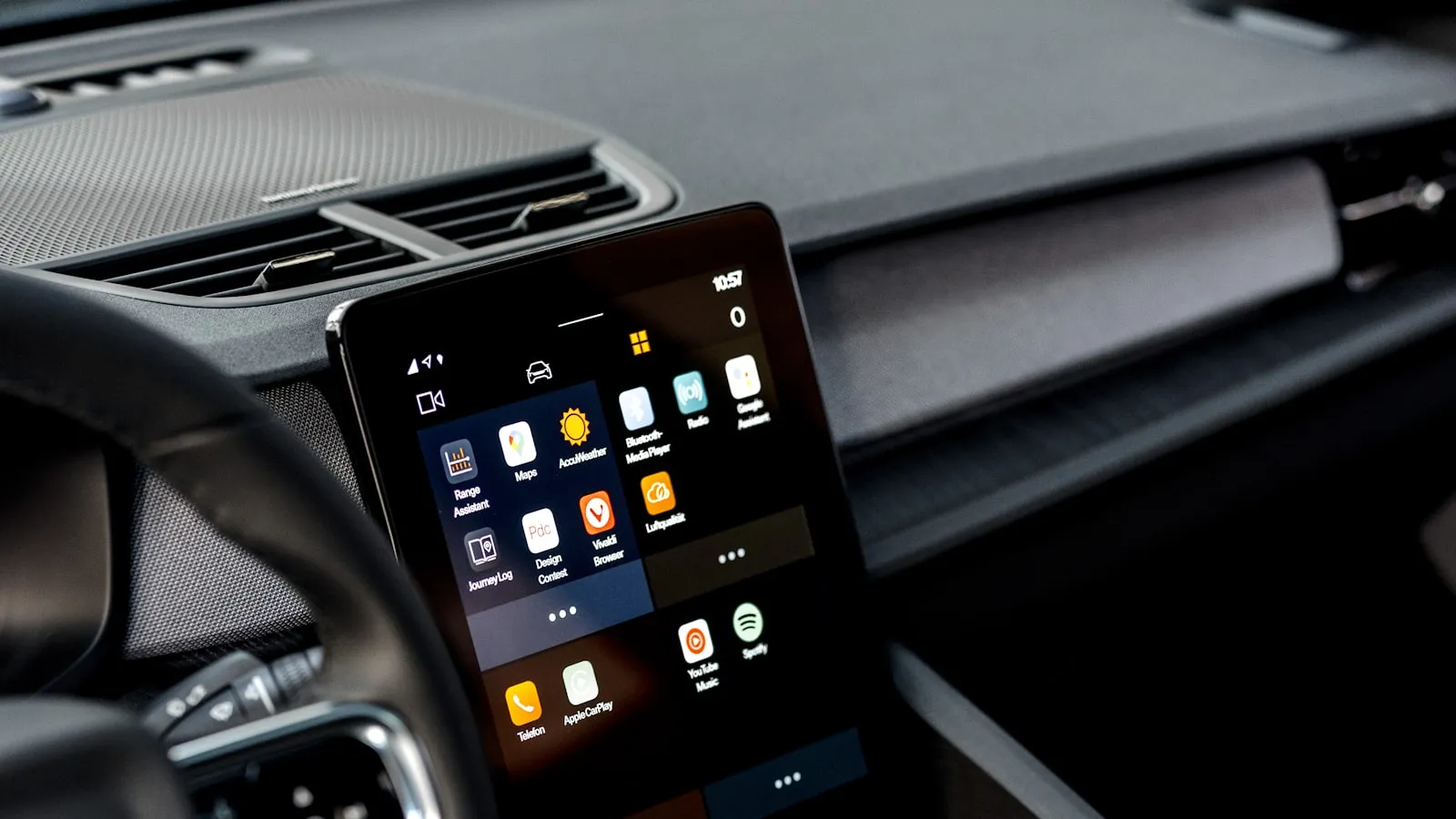
Polestar 3 (2026 model year) does not include a physical HomeLink button anywhere on the rearview mirror. The Nvidia Drive AGX Orin chip upgrade — free as a retrofit on earlier model-year 3s, standard on 2026 — added a HomeLink app to the touchscreen bottom icon bar.
The owner pairs the app by holding the original garage door remote in front of the mirror so the car can learn the code (the radio sensor is still in the mirror cluster). Then to trigger the door, the owner taps the app on the touchscreen. Owner forums report quirks like the app being inaccessible while the backup camera is on the screen — which means the driver can’t open the garage while looking at the reverse camera, a common arrival scenario.
This is the “software-only” path. The feature exists in name, but the user experience is a touchscreen tap rather than a steering-wheel-adjacent button.
Lucid Gravity — paid retrofit
Lucid Air’s older model years shipped with HomeLink as a control module. Lucid Gravity (the SUV) follows the Tesla playbook: HomeLink is sold as a paid dealer add-on, installed at the service center.
GM — partial de-featuring, capacitive touch on EVs
Chevy Blazer EV includes HomeLink on the RS trim but not on LT. Cadillac Lyriq and Escalade IQ have HomeLink, but as capacitive touch buttons on the headliner rather than physical buttons in the mirror — trim-level standard-vs-optional status varies. The pattern is “HomeLink survives, but its presence depends on the trim and the user experience has been redesigned.”
Kia EV6 — trim-gated + myQ alternative
HomeLink on the Kia EV6 is trim-gated by model year. 2025+ EV6 models with the newer ccNC head unit also offer myQ Connected Garage as a cloud-based alternative — the same direction Honda went with the Passport.
The counter-examples: who is still shipping HomeLink standard
This is the part of the story that most “manufacturers are removing HomeLink” headlines skip. The trend is real, but it is not universal. Several premium and luxury manufacturers are actively holding the line — and one of them is upgrading.
Mercedes EQS Sedan and EQS SUV
Both the Mercedes EQS Sedan and EQS SUV (2025 model year) ship with a three-button HomeLink cluster under the rearview mirror as standard equipment. This is documented in the official Mercedes-Benz USA owner’s manuals for both vehicles. Mercedes’s flagship EVs treat HomeLink as a baseline feature, not an option.
Genesis GV60
The 2025 Genesis GV60 ships with a HomeLink-equipped electrochromic mirror as standard equipment on the base “Standard” trim. This is confirmed by the Genesis window-sticker tool and Edmunds spec sheets. Genesis is delivering HomeLink at the base trim level — the most direct counter-example to the “premium brands are de-featuring it” framing.
Hyundai Ioniq 5 — actually upgraded
The Hyundai Ioniq 5 is the most interesting counter-example. HomeLink is standard on SEL and Limited trims; the SE base trim treats it as a $295 option. More notably, on the 2025 Limited, Hyundai introduced a two-way HomeLink mirror that displays door-state feedback (open/closed indicator) directly in the mirror.
While other brands are walking back HomeLink, Hyundai is making it smarter. This deserves to be louder in the conversation than it has been.
BMW iX — supported, status partial
BMW iX supports HomeLink across 2022-2026 model years. The standard-vs-optional status at the base trim is not as cleanly documented as Mercedes’s case, but BMW has not publicly de-featured the system. We’re flagging this as “supported, status partial” rather than “standard” until a window sticker confirms the base trim.
Why is this happening
We could find no clean industry-analyst report aggregating the trend — the discussion is happening in owner forums and enthusiast press (Electrek, CarBuzz, Torque News, Autoblog) rather than mainstream automotive industry coverage. From what we can piece together, three forces are pulling in the same direction.
1. Gentex licensing cost
HomeLink is owned by Gentex Corporation, which acquired the technology in 2013. Gentex publishes financials but does not disclose the per-vehicle licensing fee charged to automakers. Owner-forum estimates put the per-vehicle royalty at roughly $100-200 — flag this number as an estimate, since it is owner-aggregated rather than Gentex-disclosed.
Gentex reported 2025 net income of $384.8 million with 2026 revenue guidance of $2.60-$2.70 billion, and approximately 110 million HomeLink units in service across roughly 300 vehicle models from 50 brands. The licensing pool is real and material. Removing HomeLink from a single trim or model line is a recurring per-vehicle savings that compounds across the manufacturer’s annual production volume.
2. Subscription and proprietary-app revenue capture
Honda Passport’s myQ paywall is the strongest data point. A feature that used to be a one-time hardware inclusion is now a multi-year subscription with Chamberlain’s myQ Connected Services as the recurring-revenue partner. Kia EV6 is moving in the same direction.
This is the same playbook used elsewhere in the automotive industry — BMW’s heated-seat subscription, GM’s super-cruise subscription, Tesla’s premium-connectivity tier. HomeLink is being absorbed into the broader move from one-time vehicle pricing to recurring-revenue-per-feature.
3. Cabin redesign and cost-cutting on lower trims
Tesla’s stated 2019 reason for removing HomeLink from Model 3 was gross margin pressure on a high-volume entry-level vehicle. Ford’s restriction to Tremor 402A is pure trim segmentation — moving HomeLink up the price ladder. Polestar’s software-only approach removes the mirror module entirely, freeing the cabin design from the constraint of mounting an electronics cluster in the headliner.
EV-native brands in particular have prioritized minimalist interiors with software-first features. The physical HomeLink button — a 1996 design pattern — doesn’t fit the design language.
What this means for the next 3-5 years
A few patterns to watch:
No manufacturer has publicly reversed a removal. Once HomeLink leaves a model line, it has not come back. Tesla has not restored HomeLink to Model 3 standard equipment in seven years. Honda has not reversed the 11th-gen Accord/Civic decision.
The Passport myQ subscription model is a precedent that other automakers are likely watching. If it sticks — if Honda Passport owners renew the $129/3yr or $179/5yr subscription at high rates — expect more car-brand-and-myQ partnerships and more HomeLink replacements. If it fails — if owners complain loudly and renewal rates are low — the trend may slow.
Hyundai’s two-way HomeLink upgrade is the alternative direction worth tracking. It says HomeLink doesn’t have to be the boring 1996 button — it can evolve. Whether other manufacturers follow Hyundai’s lead or continue the removal-and-paywall path will define the next phase.
Mercedes and Genesis are the established quality bar. If your benchmark for “premium” is the flagship sedan from Mercedes or the base Genesis EV crossover, you’re getting HomeLink standard. Anything below that bar increasingly does not.
What owners can actually do
If you’ve discovered after a purchase that your car doesn’t include HomeLink — or that yours has been replaced with a subscription — three paths exist.
1. Aftermarket Gentex mirror with HomeLink. Available from third-party retailers like Bob’s Mirrors for $200-280 with self-install or pay-a-shop install. Restores the visor-button experience using the same Gentex hardware automakers used to install at the factory.
2. Subscription-based cloud integrations (myQ, in-car brand apps). These work when they work, and break when any layer in the chain — Wi-Fi at the garage, cellular in the car, vendor cloud — has a bad day. Recurring cost is part of the deal.
3. Dedicated third-party hardware that bypasses both. A small windshield-mounted Tag plus a Hub wired into the opener’s existing wall-button input, communicating over local radio. No mirror swap, no HomeLink pairing, no cloud subscription, no protocol-version dependencies. Proxly is built this way — works on any car (including ones that never had HomeLink and ones that have had it removed) and any opener brand, including driveway gates that HomeLink doesn’t support cleanly. Learn more at getproxly.com.
Bottom line
The trend toward de-featuring HomeLink is real. It is most acute on entry-level trims of high-volume EVs, on Tesla across the lineup, on Honda starting with the 2023 redesign, on Ford post-2024, and on the Polestar 3 software-only experiment. Honda’s Passport myQ paywall is the strongest single data point and the most likely precedent for the next wave.
It is not universal. Mercedes EQS keeps HomeLink standard. Genesis GV60 keeps it on the base trim. Hyundai Ioniq 5 Limited actually upgraded it. The premium-EV category has split.
For car buyers, the practical takeaway is to check the window sticker before assuming HomeLink is included. For owners who have already discovered the gap, aftermarket and third-party hardware paths exist.
The 1996 button isn’t going away everywhere. But for an increasing number of premium car owners, it has stopped showing up at the factory.
Frequently asked questions
Why is HomeLink being removed from new cars?
Three forces are pulling in the same direction. First, HomeLink is licensed from Gentex (which acquired the technology in 2013) — owner-forum estimates put the per-vehicle royalty at around $100-200, though Gentex doesn’t publish this number. Second, manufacturers are moving from one-time hardware costs to recurring revenue — Honda Passport’s myQ subscription paywall and Kia EV6’s myQ Connected Garage integration are the strongest examples. Third, cabin redesign on EVs has prioritized minimalist interiors and software-first features, which has made removing the physical HomeLink button (or the auto-dimming mirror that hosts it) easier to justify.
Which premium cars still include HomeLink standard?
As of 2026, Mercedes EQS Sedan and SUV ship a three-button HomeLink cluster under the rearview mirror as standard equipment. Genesis GV60 includes it standard on the base “Standard” trim. Hyundai Ioniq 5 Limited actually upgraded HomeLink to a two-way version that shows door state in the mirror — running counter to the broader trend. BMW iX still supports HomeLink, though trim-level standard-vs-optional status varies by model year. So the de-featuring trend is real but not universal — flagship German EVs and Hyundai/Genesis are holding the line.
Can I add HomeLink to a Tesla Model 3 / Y / Cybertruck?
Tesla Service sells a HomeLink retrofit module for Model 3 and Model Y at roughly $300-350 installed (some self-install paths exist for around $230 if you’re willing to handle the wiring). The refreshed Highland Model 3 and Juniper Model Y require bumper-area work to route the module, making the install harder than on older models. Cybertruck has no retrofit available — there is no HomeLink hardware path for the Cybertruck wiring harness.
How does Honda Passport’s myQ subscription work?
Honda replaced the visor button entirely on the 2026 Passport. The infotainment system now includes a Chamberlain myQ integration that controls a compatible garage door opener through the cloud. The feature ships with a 30-day free trial, then requires an active myQ Connected Services subscription — $129 for 3 years or $179 for 5 years. It does not control gates, and requires the garage’s myQ Wi-Fi controller to be online plus the car’s cellular connection to be healthy at the moment of use.
Is Polestar 3’s HomeLink the same as a regular HomeLink button?
Not quite. The Polestar 3’s Orin chip upgrade (free retrofit for earlier model-year 3s, standard on 2026 model year) added a HomeLink app accessible from the touchscreen bottom icon bar. There’s no physical HomeLink button on the mirror — the owner taps the app on the touchscreen to trigger the door. Owner forums also report quirks like the app being inaccessible while the backup camera is on the screen.
What’s the best way to get a HomeLink-equivalent on a car that doesn’t have one?
Three paths. (1) Aftermarket auto-dimming mirror with HomeLink — Gentex-supplied mirrors from third-party retailers like Bob’s Mirrors run $200-280 with self-install in 15-30 minutes for most cars. (2) Cloud-app integrations like myQ Connected Services, which work on Tesla, GM, Ford, Hyundai, Kia, Honda, and others but require an active subscription and a healthy cellular + cloud + home-Wi-Fi chain at the moment of use. (3) Dedicated third-party hardware that wires to the opener’s wall-button input — Proxly is built this way, with a Tag on the windshield and a Hub at the opener, and works on any car and any opener brand. Learn more at getproxly.com.
Last updated: 2026-05-26. This article reflects information available at the time of writing and is presented to the best of our knowledge from publicly available sources, manufacturer documentation, automotive press coverage (Electrek, CarBuzz, Autoblog, Torque News, MotorAuthority), and owner-forum discussion. Pricing, model-year specifications, trim-level inclusions, and manufacturer feature availability change frequently; please verify current details directly with the relevant manufacturer before making purchase or subscription decisions. Per-vehicle Gentex licensing cost figures cited in this article are owner-forum estimates and have not been publicly disclosed by Gentex. Proxly is an independent product and is not affiliated with, sponsored by, or endorsed by Tesla, Inc., Honda Motor Co., Ford Motor Company, Polestar, Lucid Motors, General Motors, Hyundai Motor Company, Kia Corporation, Genesis Motors, Mercedes-Benz, BMW, Gentex Corporation, The Chamberlain Group LLC, or any other company mentioned in this article. All product names, logos, and trademarks are the property of their respective owners. If you spot an inaccuracy or have a correction, please email getproxly@gmail.com — we update articles as new information becomes available.
Frequently asked questions
- Three forces are pulling in the same direction. First, HomeLink is licensed from Gentex (which acquired the technology in 2013) — owner-forum estimates put the per-vehicle royalty at around $100-200, though Gentex doesn't publish this number. Second, manufacturers are moving from one-time hardware costs to recurring revenue — Honda Passport's myQ subscription paywall and Kia EV6's myQ Connected Garage integration are the strongest examples. Third, cabin redesign on EVs has prioritized minimalist interiors and software-first features, which has made removing the physical HomeLink button (or the auto-dimming mirror that hosts it) easier to justify.
- As of 2026, Mercedes EQS Sedan and SUV ship a three-button HomeLink cluster under the rearview mirror as standard equipment. Genesis GV60 includes it standard on the base 'Standard' trim. Hyundai Ioniq 5 Limited actually upgraded HomeLink to a two-way version that shows door state in the mirror — running counter to the broader trend. BMW iX still supports HomeLink, though trim-level standard-vs-optional status varies by model year. So the de-featuring trend is real but not universal — flagship German EVs and Hyundai/Genesis are holding the line.
- Tesla Service sells a HomeLink retrofit module for Model 3 and Model Y at roughly $300-350 installed (some self-install paths exist for around $230 if you're willing to handle the wiring). The refreshed Highland Model 3 and Juniper Model Y require bumper-area work to route the module, making the install harder than on older models. Cybertruck has no retrofit available — there is no HomeLink hardware path for the Cybertruck wiring harness.
- Honda replaced the visor button entirely on the 2026 Passport. The infotainment system now includes a Chamberlain myQ integration that controls a compatible garage door opener through the cloud. The feature ships with a 30-day free trial, then requires an active myQ Connected Services subscription — $129 for 3 years or $179 for 5 years (pricing per Autoblog, Torque News, and the Honda Passport owners forum). It does not control gates, and requires the garage's myQ Wi-Fi controller to be online plus the car's cellular connection to be healthy at the moment of use.
- Not quite. The Polestar 3's Orin chip upgrade (free retrofit for earlier model-year 3s, standard on 2026 model year) added a HomeLink app accessible from the touchscreen bottom icon bar. There's no physical HomeLink button on the mirror — the owner taps the app on the touchscreen to trigger the door. Owner forums also report quirks like the app being inaccessible while the backup camera is on the screen. Pairing is still done by holding the original remote in front of the mirror to learn the code.
- Three paths. (1) Aftermarket auto-dimming mirror with HomeLink — Gentex-supplied mirrors from third-party retailers like Bob's Mirrors run $200-280 with self-install in 15-30 minutes for most cars. (2) Cloud-app integrations like myQ Connected Services, which work on Tesla, GM, Ford, Hyundai, Kia, Honda, and others but require an active subscription and a healthy cellular + cloud + home-Wi-Fi chain at the moment of use. (3) Dedicated third-party hardware that wires to the opener's wall-button input — Proxly is built this way, with a Tag on the windshield and a Hub at the opener, and works on any car and any opener brand. Learn more at [getproxly.com](https://getproxly.com).
Why is HomeLink being removed from new cars?
Which premium cars still include HomeLink standard?
Can I add HomeLink to a Tesla Model 3 / Y / Cybertruck?
How does Honda Passport's myQ subscription work?
Is Polestar 3's HomeLink the same as a regular HomeLink button?
What's the best way to get a HomeLink-equivalent on a car that doesn't have one?
Keep reading
Honda Dropped HomeLink From the Civic, Accord, CR-V, and Gold Wing — Trim Audit and Add-Back Costs
Honda has quietly removed HomeLink as standard from most 2023+ Civics, Accords, CR-Vs, and Gold Wings. Here's the trim-by-trim audit and what it costs to add back.

Two Cars, One Driveway Gate: Programming HomeLink Without Conflicts
Two vehicles sharing one gate can both use HomeLink without conflicts, if each completes its own rolling-code enrollment. This guide covers pairing steps, failure modes, and slot-budget math.
HomeLink in a Leased Vehicle: What Gets Reset When You Return It
When you return a leased car, the dealer checks mileage, paint, and tires — but not HomeLink. Your gate and garage codes stay in the car until someone clears them.