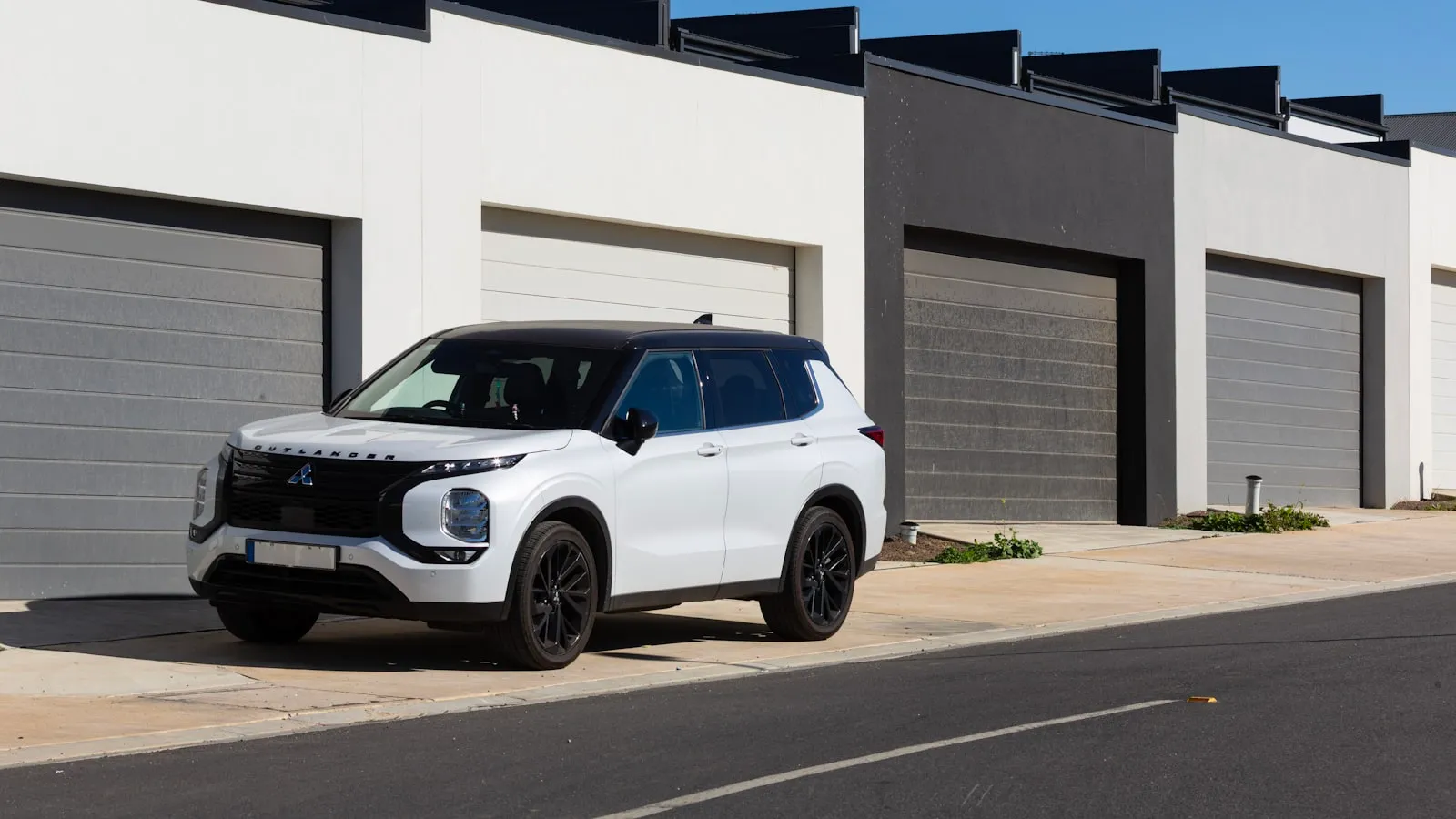
Farpointe Ranger vs. a Car GPS Tag: Long-Range Gate Access Compared
Both systems open a driveway gate when an authorized vehicle arrives — no button press, no app tap. The difference is where the intelligence sits: in a UHF reader bolted to the gate post, or in a small device riding in the car. That choice determines installation complexity, cost, and which use cases each system actually fits.
This is an honest comparison of both.
How the Farpointe Ranger works
The Farpointe Ranger is a UHF RFID reader from Farpointe Data, designed for vehicle access at gates, parking facilities, and secured driveways. It mounts on a post or wall near the gate entrance. Each authorized vehicle gets a passive windshield RFID tag — a thin transponder that adheres to the inside of the windshield.
When a vehicle approaches, the reader broadcasts a UHF signal (860–960 MHz range). The windshield tag absorbs that energy, powers up, and transmits its credential back to the reader. If the credential is enrolled, a relay fires and the gate opens.
UHF gives the Ranger meaningfully longer read range than proximity card readers, which top out at inches. Passive UHF vehicle readers in this class typically detect windshield tags at 10–20 feet; actual range varies with windshield angle, metallic tinting, and RF conditions at the site.
The Ranger outputs Wiegand data — the standard serial protocol for commercial access control. That means it talks to an access control panel, not directly to a gate opener’s control board. Most residential openers expose a dry-contact open input: two terminals that you short to trigger open. Wiegand is a different thing entirely. Bridging them requires either a Wiegand-to-relay converter or a full access control panel sitting between the reader and the opener.
In commercial and community settings, that access control infrastructure already exists. At a single-family home, it’s added hardware, added wiring, and added configuration.
For context on this class of reader, see Long-Range RFID Gate Readers: What Residential Owners Should Know.
How a car GPS tag works
A car GPS tag is a small device that mounts in the vehicle — typically clipped near the sun visor or dash. It carries its own GPS receiver, monitors the car’s position, and communicates with a paired Hub device when the car approaches home.
The Hub wires to two terminals on the gate opener’s dry-contact input — the same connection a standard hardwired button uses. When the car enters the configured arrival radius, the Hub closes the contact and the gate opens. Nothing new mounts at the gate post. The opener sees a standard short on its open input.
This is a car-side system. The reader equivalent is the GPS receiver in the Tag; the antenna equivalent is open sky. Installation is DIY: the Hub in the control box, the Tag in the car, a setup flow to link them.
For a broader look at how GPS gate openers work, see GPS Gate Opener: How It Works and Who It’s For.
The comparison
| Factor | Farpointe Ranger (UHF RFID) | Car GPS Tag |
|---|---|---|
| Reader location | Gate post — needs power and wiring | None (intelligence is in the car) |
| Vehicle credential | Windshield RFID tag, enrolled in access panel | GPS tag, self-configured |
| Access control panel | Required (Wiegand output) | Not required |
| Wires directly to residential opener | No — needs Wiegand-to-relay bridge | Yes — two-wire dry-contact |
| Read range | ~10–20 ft typical (passive UHF) | Configurable GPS radius |
| Installation type | Professional | DIY |
| Multi-vehicle credential management | Native — per-enrolled tag, revoke remotely | Single household |
| GPS environment dependency | None | Needs clear sky visibility |
Where the Farpointe Ranger fits
Gated communities and HOAs. Multi-resident credential management is what the Ranger is designed for. Each vehicle gets its own enrolled tag. When a resident moves out, the credential disappears from the access control panel — no physical change to the gate, no hardware swap. That’s a real operational advantage at scale.
Sites with existing access control infrastructure. If a facility already runs an access control panel and Wiegand readers, the Farpointe Ranger slots in without adding a new infrastructure category.
Environments where GPS isn’t reliable. Underground garages, urban canyons with blocked sky, or areas with persistent GPS interference will cause problems for a car GPS tag. UHF RFID is indifferent to satellite visibility.
Where a car GPS tag fits
Single-family driveways. The Hub wires to the existing gate opener’s dry-contact input — no access control panel, no Wiegand converter, no electrician. A homeowner with one or two cars doesn’t need community-scale credential infrastructure.
Standard residential opener control boards. Almost every residential swing and slide gate operator has a dry-contact open input. The GPS tag Hub connects directly. The Farpointe Ranger cannot connect to that input without an intermediate device.
Installs where gate-side hardware isn’t an option. If you’re renting, or if HOA rules restrict modifications to the gate post, a car-side system keeps the gate stock. The opener just sees a standard contact closure.
One datapoint on the complexity gap: in a homeautomation forum thread from 2026, a homeowner tried to replicate a similar setup using a commercial UHF reader (Transcore) sourced from eBay to open their home gate. The person who got it working described themselves as an access-control specialist and noted it took “more equipment than you’d bargain for.” That’s the gap between a gated-community system and a home driveway — not impossible, but the Ranger isn’t a plug-in product for residential use.
Proxly’s approach
Proxly’s Tag is a car GPS tag of this type. It has its own dedicated GPS receiver — not the phone’s, not a cloud service — and communicates with the Proxly Hub over a low-power radio link. The Hub wires to the gate opener’s dry-contact open input.
Proxly is designed for single-household residential driveways, not multi-resident credential management. If you’re running a gated community or a multi-tenant facility, a reader-based system with an access control panel is the right fit for that job.
For a homeowner with a standard residential gate opener who wants hands-free arrival without mounting hardware at the gate post, Proxly is worth evaluating. Proxly is currently in pre-launch; details at getproxly.com.
The honest summary
The Farpointe Ranger is a commercial access control reader. It’s the right answer for sites that need gate-side credential management at scale — gated communities, HOAs, commercial sites, or any facility where centralized enrollment and per-tag revocation are real operational requirements. It’s built for that job and does it well.
A car GPS tag solves a different job: one household, one or two cars, hands-free arrival without adding gate-side infrastructure. The entire system works with the opener already at the driveway.
Neither wins in the other’s lane.
For related reading on long-range vehicle access methods:
- RFID Gate Reader vs. GPS Tag for a Home Gate
- RFID Windshield Tag Security for Residential Gates
- AWID Long-Range Gate Reader: A Residential Assessment
- Nedap uPASS on a Home Gate: What It Costs vs. a GPS Tag
Last updated: 2026-08-30. This comparison is built from manufacturer documentation, public spec sheets, and patterns reported by owners in public forums. We have not purchased, installed, or operated this product ourselves, and we say so where a claim comes from an owner report rather than a manufacturer spec. Pricing, specifications, and availability may change after publication, so verify current details with the manufacturer before buying. Proxly is an independent product and is not affiliated with, sponsored by, or endorsed by Farpointe Data or any other company mentioned here. All product names and trademarks are the property of their respective owners. Spotted an inaccuracy? Email getproxly@gmail.com and we’ll correct it.
Frequently asked questions
- The Farpointe Ranger is a UHF RFID reader for vehicle access control — gates, parking facilities, and secured driveways. Each authorized vehicle gets a windshield tag enrolled in an access control system; the reader detects it at range and triggers a relay to open the gate.
- No. The Ranger outputs Wiegand data, which requires an access control panel to decode and fire a relay. You can't connect it directly to a residential gate opener's dry-contact input without a Wiegand-to-relay converter or a compatible access controller between them.
- A Farpointe Ranger mounts a reader at the gate post and needs power, wiring, and an access control panel. A car GPS tag puts all the intelligence in the vehicle — a small Hub wires to two terminals on the gate operator's control board, and the Tag in the car does the rest. Nothing new mounts at the gate post.
- The Farpointe Ranger is designed for multi-vehicle credential management. Each vehicle gets its own enrolled windshield tag; revoking access means removing the credential from the access control panel. A car GPS tag is suited to a single household's vehicles, not community-scale credential management.
- Installing a UHF reader like the Farpointe Ranger is access-control work: the reader needs power at the gate post, wiring to an access controller, and configuration of that controller. In a homeautomation forum thread, a homeowner who replicated a similar setup using a commercial UHF reader noted it took access-control expertise and 'more equipment than you'd bargain for.'
What is the Farpointe Ranger used for?
Does the Farpointe Ranger wire directly to a residential gate opener?
How does a car GPS tag differ from a Farpointe Ranger in terms of what's at the gate?
Which system handles multiple vehicles and residents better?
Can a homeowner install a Farpointe Ranger themselves?
Keep reading
What Is a Gate Opener's Duty Cycle and Why It Matters
Duty cycle tells you how hard a gate opener motor can work before it needs to cool down. Here's what the spec means, how to calculate your requirements, and what happens when you ignore it.
FAAC SimplyConnect Review: Setup, App Experience, and the Cloud Question
FAAC SimplyConnect adds WiFi app control to FAAC gate openers through a dealer-installed module. Here's what it does well, where it falls short, and what to know before adding it.
Mighty Mule Alternatives for Driveway Gates: What to Buy Instead in 2026
Mighty Mule works for light-duty gates. When you need better reliability or hands-free access, these are the alternatives worth considering for your driveway.