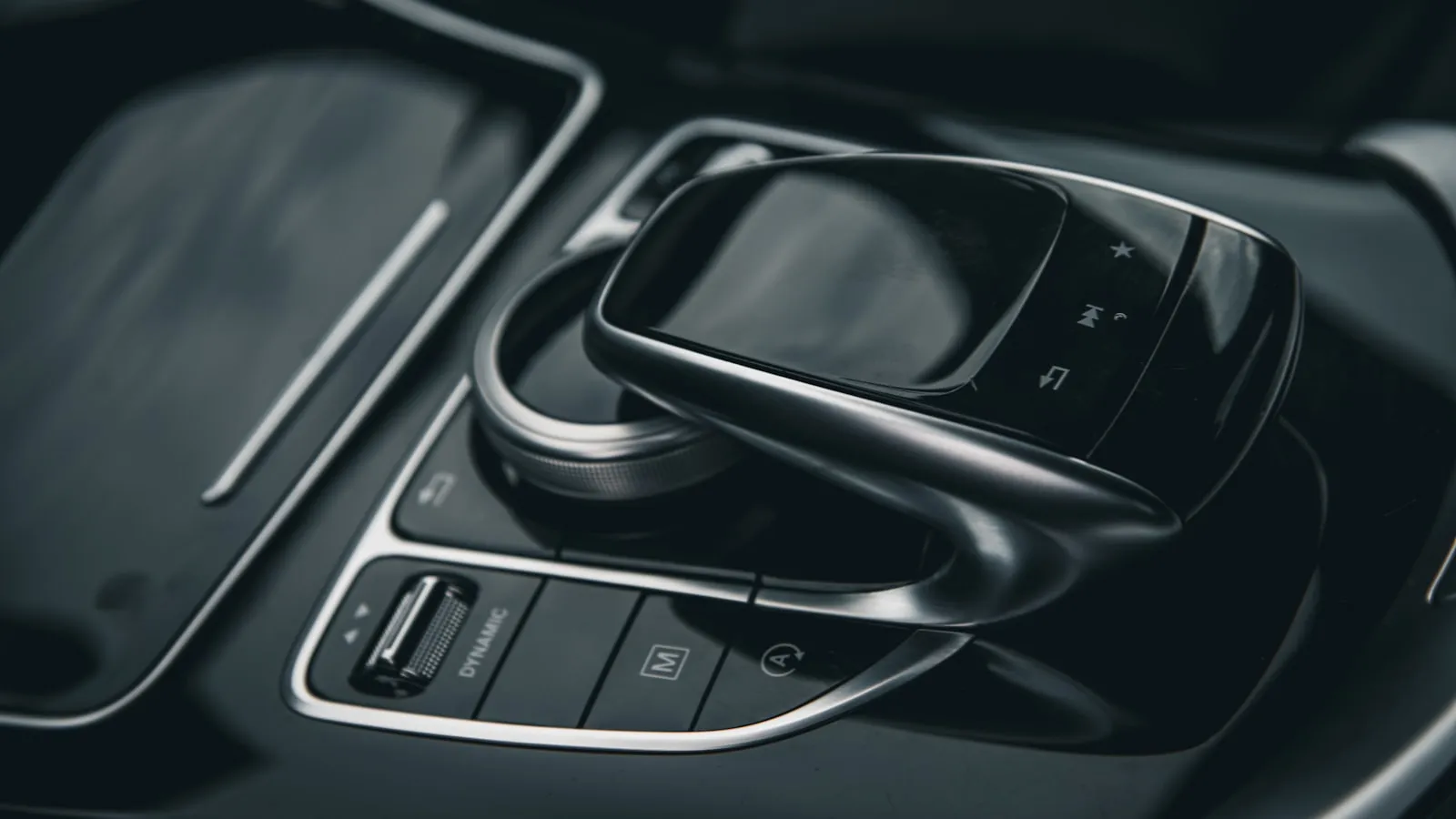
Most HomeLink users have no idea their visor button is a certified radio transmitter — approved by the FCC before it left the factory, operating under rules that trace back to federal telecommunications law.
Understanding those rules explains something genuinely confusing: why HomeLink pairs cleanly to one opener and fails on another, despite the buttons looking identical and the pairing steps being the same.
Part 15 in Plain Terms
Title 47 of the Code of Federal Regulations, Part 15, governs unlicensed, low-power radio devices — intentional radiators that transmit RF energy for communication without holding a channel license. Garage door openers, car key fobs, and HomeLink visor modules all fall into this category.
The core obligations under Part 15:
- Output power is capped, typically well under 1 mW for the bands HomeLink uses
- The device must not cause harmful interference to licensed services
- The device must accept any interference it receives, with no FCC recourse
- Every device sold commercially in the United States must carry an FCC ID
That FCC ID stamped or etched on your HomeLink module confirms the transmitter passed pre-market certification. It is the only regulatory approval HomeLink ever receives — no ongoing license, no spectrum protection.
Why HomeLink Spans Six Different Frequencies
HomeLink transmitters have been built for 288, 310, 315, 390, 418, and 433.92 MHz since the technology appeared in the early 1990s. These aren’t arbitrary choices. Each frequency occupies a distinct Part 15 sub-band with its own power limit and allocation history.
The practical result: a HomeLink module certified at 390 MHz cannot pair to an opener designed for 315 MHz. The transmitter is broadcasting on the wrong channel. This is the underlying mechanism behind one of the more frustrating patterns in the category — HomeLink works on the garage door but not the driveway gate — because gate operators are more commonly built around 390 or 433.92 MHz, while post-2011 garage door openers (running Security+ 2.0) standardized on 310 and 315 MHz.
Our breakdown of the Security+ 2.0 and HomeLink Security 2.0 naming confusion covers what that protocol change actually changed beyond frequency selection.
The Interference Clause
Part 15 cuts both ways. Because HomeLink is unlicensed, it must accept interference from any device with a lawful claim to those frequency bands. Tire pressure monitoring systems (TPMS) operate near 315 MHz. Scientific instruments, weather telemetry, and industrial automation occupy adjacent ISM allocations.
When interference disrupts a HomeLink signal, Part 15 gives you no formal recourse. There is no licensing body to enforce access, no protected spectrum. This is structurally different from a cellular signal, which operates in licensed bands with FCC-enforced interference protections.
What Happens When the Rules Change
The FCC periodically revisits Part 15 allocations. When a sub-band is reassigned to licensed use or its power limits tighten, devices already in the field can continue operating under grandfathering provisions — but new devices sold after the effective date must comply with the updated rules.
Any future reallocation affecting the 310/315 or 390 MHz sub-bands would force new HomeLink hardware through a new certification cycle. Openers and vehicles already on driveways would not stop working, but new modules would need to meet the revised standard. No announced reallocation targeting HomeLink frequencies is in effect as of this writing.
For background on the terms that come up in these discussions — rolling code, Security+, RF bands, LEARN button — the driveway gate glossary covers each one plainly.
The trend toward premium vehicles quietly dropping built-in HomeLink is partly a product response to this fragmentation: fewer frequency bands to certify across a model lineup, fewer compatibility edge cases to document, fewer customer-support calls about bands that don’t match the gate.
The Layer That Removes the RF Problem
Vehicle-paired gate systems don’t use RF at all. They rely on the car’s GPS position to trigger the gate — no visor transmitter, no frequency to certify, no Part 15 compliance path. One approach in this category is in pre-launch at getproxly.com/beta.
Reference
Frequently asked questions
- No. HomeLink transmitters operate under FCC Part 15 as unlicensed intentional radiators. They must carry an FCC ID confirming pre-sale certification testing, but no ongoing operating license is required. Part 15 devices must accept any interference they receive without FCC protection.
- HomeLink has shipped on 288, 310, 315, 390, 418, and 433.92 MHz across different model years and hardware revisions. Each sits in a different Part 15 sub-band, which is the root cause of compatibility mismatches between newer openers and older vehicles.
- Usually a frequency mismatch. Post-2011 residential garage door openers using Security+ 2.0 are typically certified at 310 or 315 MHz. Many driveway gate operators use 390 or 433.92 MHz. If your HomeLink module only transmits on the garage-door bands, it will not trigger the gate.
Does HomeLink need an FCC license to operate?
What frequencies does HomeLink use?
Why does HomeLink work on my garage door but not my driveway gate?
Keep reading
Programming HomeLink for a Mighty Mule Gate Opener
Most residential Mighty Mule gate openers use fixed-code 315 MHz remotes — no rolling-code dance required. Here is the exact HomeLink training procedure and what to do when range falls short.
How to Program Lexus HomeLink: RX, LX, GX, NX, and ES
Step-by-step guide to programming Lexus HomeLink on RX, LX, GX, NX, and ES — where the buttons are, the rolling-code two-step, and five fixes when training stalls.
How to Program GMC HomeLink (Sierra, Yukon, Canyon, and Hummer EV)
Step-by-step guide to programming GMC HomeLink on Sierra, Yukon, Canyon, and Hummer EV — button location by model year, the rolling-code two-step, and five reasons training stalls.